

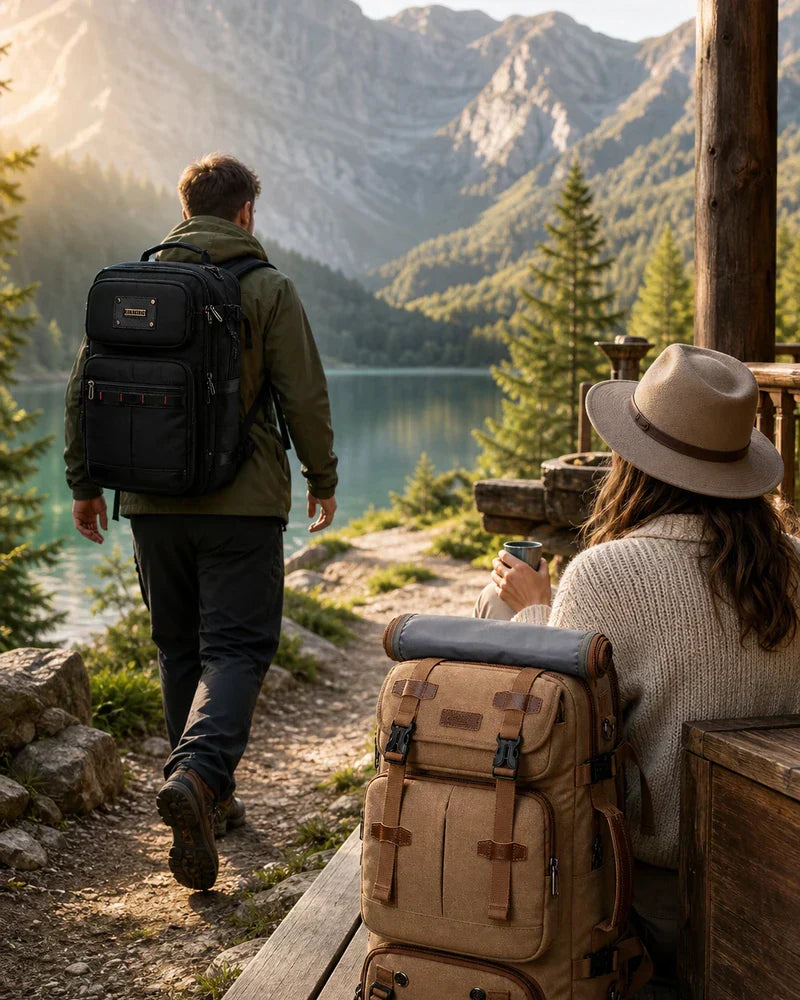
Les voyageurs modernes ne se rechargent pas tous de la même manière. Certains se sentent reposés après une randonnée au lever du soleil, une liaison ferroviaire rapide et une journée complète d'exploration. D'autres reviennent rafraîchis après un petit-déjeuner lent, un après-midi à la plage sans hâte et suffisamment de place dans leur emploi du temps pour changer d'avis. Aucun des deux styles n’est meilleur. La question utile est de savoir quel rythme décrit votre prochain voyage, car cette réponse devrait façonner à la fois votre liste de colisage et votre sac.
Réponse rapide
Choisissez un sac de voyage orienté aventure lorsque votre itinéraire implique des mouvements fréquents, de la marche, des conditions météorologiques changeantes, des transports en commun ou un accès rapide aux couches et aux essentiels. Choisissez un sac axé sur la détente lorsque la plupart des transferts se font de l'aéroport à l'hôtel ou de la voiture à l'hébergement et que vous appréciez une disposition d'emballage ouverte, une capacité flexible et une organisation facile de la chambre. Pour un voyage mixte, privilégiez le transport confortable d'un sac à dos, un compartiment principal structuré et un système de zones simple plutôt que d'essayer d'emballer deux armoires entièrement séparées.
Points clés à retenir
- Votre style de voyage est davantage défini par le mouvement et le rythme quotidien que par la destination elle-même.
- Les voyages d'aventure récompensent un transport stable, un accès rapide, un emballage discipliné et une organisation adaptée aux conditions météorologiques.
- Les voyages de détente permettent une disposition des bagages plus flexible, mais le suremballage crée toujours des frictions lors des transferts.
- Un sac à dos de voyage 38-40L peut convenir à de nombreux voyages de trois à cinq jours lorsque la disposition correspond à l'itinéraire.
- Pour les voyages mixtes, créez un système de vêtements polyvalent et organisez le sac par fréquence d'accès.
L'aventure et la détente sont un spectre
« Voyage d'aventure » ne signifie pas nécessairement escalade technique, et « voyage de détente » ne nécessite pas de passer chaque jour au bord d'une piscine. Un séjour en ville avec un départ matinal, de longues journées de marche et plusieurs changements d'hôtel peut être plus exigeant physiquement qu'une semaine dans un refuge de montagne. Un road trip peut sembler aventureux un jour et complètement détendu le lendemain.
Au lieu d’appliquer une étiquette large, regardez le rythme pratique du voyage. À quelle fréquence déplacerez-vous votre sac ? Jusqu’où allez-vous le porter ? Aurez-vous besoin de vêtements de pluie, d’eau ou d’un appareil photo pendant la journée ? Déballez-vous une fois ou changez-vous d'emplacement tous les soirs ? Les réponses révèlent les caractéristiques du sac qui comptent.
Trouvez votre style de voyage en cinq questions
- Combien de transitions majeures y a-t-il dans l’itinéraire ? Comptez les correspondances aéroportuaires, les changements de train, les déménagements d'hôtel, les voyages en ferry et les longues promenades avec bagages.
- À quoi ressemble une journée normale ? Une journée active peut nécessiter des couches, de l'eau, des appareils électroniques et des articles à accès rapide. Une journée détendue peut nécessiter seulement une configuration de journée compacte après l'enregistrement.
- Dans quelle mesure le plan est-il fixe ? Les itinéraires flexibles bénéficient d'un sac qui reste maniable lorsque les plans, la météo ou le transport changent.
- Allez-vous déballer complètement ? Les voyageurs séjournant dans une chambre peuvent considérer le sac comme un espace de stockage pour le transport. Les déménageurs fréquents ont besoin d’une mise en page qui fonctionne sans déballage complet.
- Qu’est-ce qui crée du stress pour vous ? Certains voyageurs n'aiment pas porter de poids ; d'autres n'aiment pas fouiller dans un seul grand compartiment. Choisissez en fonction de la friction que vous ressentez réellement.
| Facteur de décision | Voyage orienté aventure | Voyage détente |
|---|---|---|
| Rythme quotidien | Débuts matinaux, longues journées, changements d'activités | Moins d'activités programmées, des transitions plus lentes |
| Mouvement du sac | Transport fréquent et accès répétés | Principalement le transport entre l'aéroport, la voiture et l'hébergement |
| Priorité d'emballage | Mobilité, couches, accès, organisation compacte | Capacité flexible, déballage facile, variété de tenues |
| Disposition utile | Zones définies et poches extérieures accessibles | Large ouverture principale et cubes d'emballage simples |
| Erreur courante | Emballer trop de matériel « juste au cas où » | Ajouter des tenues supplémentaires car l'espace est disponible |
| Meilleur essai | Transportez la charge complète pendant 15 minutes | Pratiquez un transfert complet d'hôtel |

Ce dont un sac orienté aventure a besoin
Le mouvement change tout. Si vous devez traverser des gares, monter des escaliers, traverser des rues inégales ou garder le sac avec vous entre les heures d'enregistrement, le transport sur sac à dos offre généralement plus de liberté qu'un format porté à la main. Le sac doit conserver sa forme sous une charge réaliste et permettre aux articles nécessaires au transport de rester accessibles.
Pour la plupart des voyages non techniques, les priorités utiles incluent un compartiment principal stable, des points d'accès séparés, des fermetures sécurisées et un emplacement prévisible pour les documents, l'alimentation, une couche légère et les petits objets essentiels. Une organisation externe peut faire gagner du temps, mais seulement lorsque chaque poche a une utilité. Trop de poches similaires encouragent les voyageurs à disperser leurs objets importants et à oublier où ils ont été placés.
Le matériau affecte également le comportement d'un sac en utilisation réelle, mais les étiquettes larges ne doivent pas remplacer les spécifications du produit. Le nylon peut être pratique pour les mouvements fréquents car il est couramment utilisé dans les équipements de voyage, tandis que la toile offre une sensation et une structure différentes. La résistance à l'eau, les limites de charge, les dimensions et la compatibilité avec les compagnies aériennes doivent toujours être confirmées à partir des détails spécifiques du produit et des règles du transporteur avant le départ.
Un système de zone d'emballage d'aventure pratique
- Zone d'accès immédiat : passeport, téléphone, portefeuille, câble de recharge, titre de transport et lunettes de soleil.
- Zone météo : coque compacte, couche isolante légère et petit sac pour les objets humides.
- Zone vestimentaire principale : couches coordonnées emballées dans un ou deux cubes plutôt que dans de nombreux petits conteneurs.
- Zone protégée : ordinateur portable, tablette, appareil photo ou autre équipement fragile où le sac offre un rangement approprié.
- Zone d'arrivée : un dessus propre, des articles de toilette de base et des vêtements de nuit accessibles sans tout déballer.
De quoi a besoin un sac axé sur la relaxation
Un itinéraire relaxant réduit généralement le temps de transport, mais n’élimine pas la nécessité d’une bonne organisation. Un sac qui voyage de l'aéroport à un complexe, une voiture de location ou un seul hôtel peut mettre davantage l'accent sur un compartiment principal facile à visualiser et moins sur un accès externe constant. L’objectif est un transfert fluide et une configuration de la pièce calme.
Ce style implique souvent plus de choix de tenues : des couches décontractées pour la journée, des vêtements de dîner, des maillots de bain, des sandales ou un livre. La tentation est de remplir tous les espaces disponibles. Une meilleure approche consiste à choisir une petite palette de couleurs et à attribuer à chaque élément un rôle clair. Si deux pièces servent le même objectif, prenez celle qui fonctionne dans plus de contextes.
Les sacs de voyage en toile peuvent compléter les déplacements plus lents sur route, en train ou à l'hôtel lorsque leur poids, leurs dimensions et leur configuration de transport correspondent à l'itinéraire. Le facteur décisif n’est pas seulement l’apparence. Chargez le sac avec les chaussures et les vêtements que vous prévoyez d'emporter, puis déplacez-le d'une pièce vers un véhicule ou descendez un escalier. Un voyage détendu ne devrait pas commencer par un transfert inutilement difficile.
Un système pratique de zone d’emballage de détente
- Cube d'arrivée : tenue de premier jour, maillot de bain ou couche de détente et articles de toilette essentiels.
- Cube vestimentaire quotidien : hauts et bas interchangeables qui peuvent couvrir la majeure partie du voyage.
- Zone chaussures : limiter les chaussures par activité et isoler les semelles des vêtements.
- Fuseau horaire personnel : un livre, des écouteurs, un journal ou tout autre petit objet qui correspond au but du voyage.
- Zone de retour : un sac à linge léger pour que les articles usés ne perturbent pas le système d'emballage propre.
Deux options Witzman pour différents rythmes de voyage
Les recommandations de produits doivent suivre l'itinéraire et non l'interrompre. Les deux options ci-dessous offrent une capacité similaire pour les courts voyages, mais des éléments matériels et organisationnels différents. Consultez la page du produit en direct pour connaître les couleurs, les dimensions, la disponibilité et les détails actuels des fonctionnalités avant de choisir.

Witzman B737 Sac à dos de voyage en nylon
38L | Suggéré pour les excursions d'une journée de 2 à 4
Une combinaison pratique pour les transitions fréquentes, l’accès organisé aux aéroports et les itinéraires urbains actifs.
À partir de 158.76 USD

Witzman A8013 Sac à dos de voyage classique en toile
40L | Suggéré pour les excursions d'une journée de 3 à 5
Un choix naturel pour les voyages en voiture, les séjours à l'hôtel et les voyageurs qui préfèrent un style de toile classique.
À partir de 95.78 USD
Aucun des deux modèles n’est automatiquement limité à une seule personnalité de voyage. Un voyageur organisé peut emporter un sac en toile lors d'un séjour actif en ville, tandis qu'un sac à dos de voyage en nylon peut bien fonctionner pour un séjour tranquille en station. La meilleure correspondance dépend de la façon dont le matériau, le style d’ouverture, les compartiments et le système de transport soutiennent votre itinéraire. Vous pouvez comparer ces options avec les plus larges Collection de sacs de voyage Witzman.
Comment préparer ses valises pour un voyage d'aventure de trois à quatre jours
Commencez par l’activité planifiée la plus difficile, puis supprimez tout ce qui ne la supporte pas ou les jours de voyage qui l’entourent. Une liste raisonnable pour un court voyage peut comprendre deux ou trois hauts à séchage rapide, deux bas, une couche intermédiaire légère, une coque imperméable, des vêtements de nuit, des sous-vêtements et des chaussettes, une paire de chaussures principale, des articles de toilette compacts, une bouteille réutilisable, des appareils électroniques de base et des articles de sécurité spécifiques à la destination.
Portez les vêtements les plus volumineux pendant le transport. Gardez la première couche météo près de l'ouverture, pas sous le cube de vêtements. Si l’itinéraire comprend une activité de plein air qui nécessite un équipement de protection spécialisé, suivez la liste de l’opérateur et les directives locales plutôt que de considérer une liste générale de colisage de voyage comme suffisante.
Comment préparer vos valises pour un voyage de détente de trois à quatre jours
Construisez une petite garde-robe capsule avant d’ajouter des pièces spéciales. Par exemple, choisissez deux bas, trois hauts, une couche légère, une option de dîner polyvalente, des vêtements de nuit, un maillot de bain si nécessaire et des chaussures liées aux activités réelles. Ajoutez des articles de confort personnel seulement après avoir emballé les vêtements et les articles de toilette essentiels.
Laissez une certaine capacité inutilisée. Un sac bien emballé à la maison est plus difficile à fermer une fois que des vêtements ont été portés, que des souvenirs ont été ajoutés ou que l'ordre d'emballage a changé. L'espace supplémentaire n'est pas gaspillé ; c'est une salle opérationnelle qui facilite le voyage de retour.
Planifier un voyage qui inclut les deux
De nombreux voyages mémorables combinent des matinées actives et des après-midi tranquilles. La réponse n’est pas d’avoir une garde-robe d’aventure et une garde-robe de détente. Utilisez des couches qui traversent les paramètres, limitez les chaussures spécifiques à une activité et séparez uniquement les équipements qui ont vraiment besoin d'isolation.
Un itinéraire mixte bénéficie d'un sac à dos qui reste confortable pendant le segment le plus mobile, même si la plupart des journées sont faciles. Préparez vos bagages par fréquence d'accès : les essentiels de transport les plus proches de la main, les couches actives ensuite, les vêtements de base dans la zone principale et les articles occasionnels plus profonds dans le sac. A l'hôtel, retirez uniquement le cube ou la pochette nécessaire à cette étape du voyage.
Test final du sac avant le voyage
- Emballez la charge complète prévue, y compris les chaussures, les articles de toilette et les appareils électroniques.
- Vérifiez les dimensions et le poids emballés auprès de chaque transporteur présent sur l'itinéraire.
- Portez le sac pendant au moins 15 minutes et utilisez les escaliers s'ils sont probables pendant le voyage.
- Récupérez votre passeport, votre chargeur, votre couche météo et vos articles de toilette sans vider le compartiment principal.
- Confirmez que les sangles, les extrémités libres et les tirettes de fermeture éclair ne créeront pas de problèmes dans les transports encombrés.
- Retirez un élément non essentiel avant le départ ; la plupart des voyageurs le manquent moins que prévu.
Foire aux questions
Un sac à dos est-il meilleur pour les voyages d’aventure ?
Un sac à dos est souvent pratique lorsqu'un voyage implique des escaliers, des transports en commun, des rues inégales ou des promenades plus longues, car il garde les deux mains libres. La bonne réponse dépend toujours du poids emballé, de l’ajustement, de l’itinéraire et des éventuelles limitations physiques.
Quelle taille de sac convient pour un voyage relaxant de trois à cinq jours ?
De nombreux voyageurs peuvent utiliser un sac 30-40L pendant trois à cinq jours, notamment avec une garde-robe coordonnée et des chaussures limitées. Le climat, la taille des vêtements, l'accès à la buanderie et les activités spéciales peuvent modifier les exigences, alors testez la liste de colisage réelle plutôt que de vous fier uniquement à un nombre de capacités.
Un sac de voyage peut-il convenir à la fois à l’aventure et à la détente ?
Oui. Recherchez un aménagement qui prend en charge la partie active du voyage et qui reste facile à déballer à l'hôtel. Un transport confortable, une ouverture principale utile et un système de zone d'emballage cohérent sont plus importants qu'une étiquette « aventure » ou « loisirs ».
Dois-je choisir le nylon ou la toile pour voyager ?
Choisissez parmi les spécifications de produits vérifiées et les conditions de l'itinéraire. Tenez compte du poids, de la construction, des soins, de l’organisation et de l’exposition aux intempéries. Ne présumez pas que tous les sacs en nylon ou en toile ont les mêmes caractéristiques de performance.
Comment éviter de surcharger un itinéraire mixte ?
Utilisez une seule garde-robe de couleur coordonnée, portez la couche la plus volumineuse pendant le transport, limitez les chaussures aux activités planifiées et rangez-les par fonction. Après le premier pack de test, supprimez les éléments en double et tout ce qui est inclus uniquement dans un scénario improbable.
En résumé
Aventure et détente ne sont pas des identités opposées ; ce sont des rythmes de voyage différents. Adaptez votre sac à la quantité de mouvement, à la fréquence d'accès, à la durée du voyage et à la transition la plus difficile. Un sac à dos de voyage bien choisi doit rendre les moments actifs gérables et les moments calmes plus faciles, sans avoir à transporter une deuxième version du voyage sur le dos.
Conclusion
Planifiez le voyage que vous ferez réellement, et non le voyageur que vous pensez devoir être. Lorsque votre rythme, votre système de rangement et votre sac s'accordent, il devient plus facile de profiter d'un itinéraire ambitieux et d'une évasion sans hâte.

Partager:
Voyage d’aventure après 50 ans : sécurité et confort
Large Duffel Bags for Men: Features to Consider for Extended Trips