

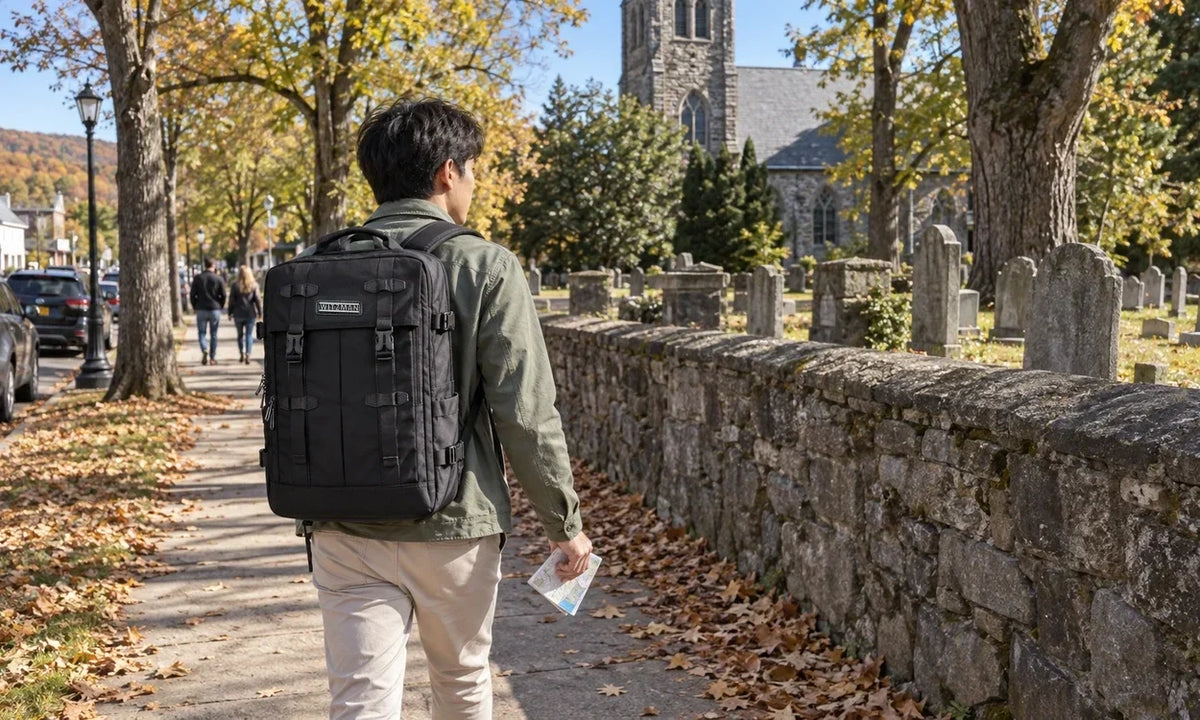
A Sleepy Hollow fall trip can be a calmer Salem alternative, but only if you plan around time slots and geography. October weekends here are busy too. The useful difference is that you can separate the cemetery, river villages, historic sites and one night event instead of pushing through one continuous crowd.
Less crowded is a strategy, not a guarantee. Do not choose Sleepy Hollow expecting empty lanes on Halloween weekend. Choose it because a traveler can arrive by train, walk a focused route, reset at the hotel before dark and reserve one evening experience. That structure gives the weekend breathing room.
The 2026 schedule makes the pressure points unusually clear. On October 24, the farmers market, Gothic Market, Halloween 10K, daytime programming and Tarrytown Halloween Parade overlap. October 31 has another dense stack. Check the official October calendar before booking anything; event hours and availability can change.
First, map the crowd instead of fearing it
There is no single Sleepy Hollow crowd. There are four different bottlenecks, and each needs a different response.
This is also why the weekend should not become a checklist. Pick one atmospheric daytime anchor and one ticketed night anchor. Leave the rest as optional texture: a river walk, a cafe, an old facade, a quiet residential street. For a broader rail-first autumn journey, our Hudson Valley fall train guide explains the landscape and seat-choice side of the trip.
A 48-hour route that protects the good hours
Arrive, check in and learn the two villages in daylight
Take the Metro-North Hudson Line to Tarrytown if your lodging and dinner are near Main Street. Philipse Manor is useful for the northern Sleepy Hollow side, but fewer trains stop there and it is not a universal shortcut. Walk the first route before dark: station to hotel, hotel to dinner, and the pickup point for any night ride share. Friday is for orientation, not squeezing in a major attraction.
Use the cemetery's quiet public hours
Start near opening time if you want fallen leaves, stonework and old trees without entering with a tour wave. This remains an active, privately owned cemetery where funerals occur. Keep voices low, stay on paths, avoid staged photo behavior around graves and follow posted rules.
Choose the history layer: self-guided or reserved
If the cemetery story is the main reason for the trip, book a guided slot rather than hoping to improvise. The official cemetery tour page says advance tickets are required. For 2026 it lists October daytime and lantern options, including late weekend departures. The one-hour Washington Irving tour and the longer classic tour are different commitments; do not book by time alone.
Move south for lunch and one old-building stop
Let lunch separate the cemetery from the second activity. Old Dutch Church, Philipsburg Manor and Tarrytown's older streets provide the architectural mood, but opening hours and admission rules differ. Choose one interior visit. Spending the afternoon commuting between every historic property costs more atmosphere than it adds.
Return to the room before the temperature drops
This reset is the hinge of the trip. Dry a damp base layer, charge the phone, refill water and add a midlayer before sunset. Carrying the night layer all day is possible, but returning once lets the daytime remain light and prevents a cold two-hour wait after the final program.
Commit to one night event
A lantern cemetery tour, story performance or historic-site program should be the evening, not the first of three stops. Build in 30 minutes beyond the map estimate. After the event, leave directly or sit down nearby; do not rely on catching a second timed admission across town.
Use the river edge, then depart before the road peak
Sunday morning is for the softer version of the destination: coffee, Hudson views, leaves along the village streets and a train home before the afternoon rush. It also gives you a weather fallback if Saturday morning was wet.

The useful pause happens before dark: return, add the insulating layer, charge the phone and carry only what the reserved evening requires.
Book the bed for the route, not the room photo
Accommodation location decides whether the Saturday reset is realistic. A beautiful property far from both the station and the night event may force four ride-share legs through October traffic.
| Your trip shape | Best base | Why it works | Hidden cost |
|---|---|---|---|
| Train, restaurants and easy departure | Tarrytown station / Main Street side | Simple arrival, walkable food and the clearest Sunday exit | Some Sleepy Hollow sites require a longer walk or ride |
| Cemetery and Philipsburg Manor first | Northern Tarrytown or Sleepy Hollow village | Shorter morning positioning and easier hotel reset | Confirm the actual walking route, not straight-line distance |
| Multiple outlying historic estates | Car-access lodging with parking | Better for locations beyond the village core | October traffic and event parking can erase the advantage |
| Blaze plus Sleepy Hollow | Treat as a two-zone trip | Recognizes that Croton-on-Hudson is a separate evening destination | Needs a car or deliberate rail/ride-share plan and more buffer |
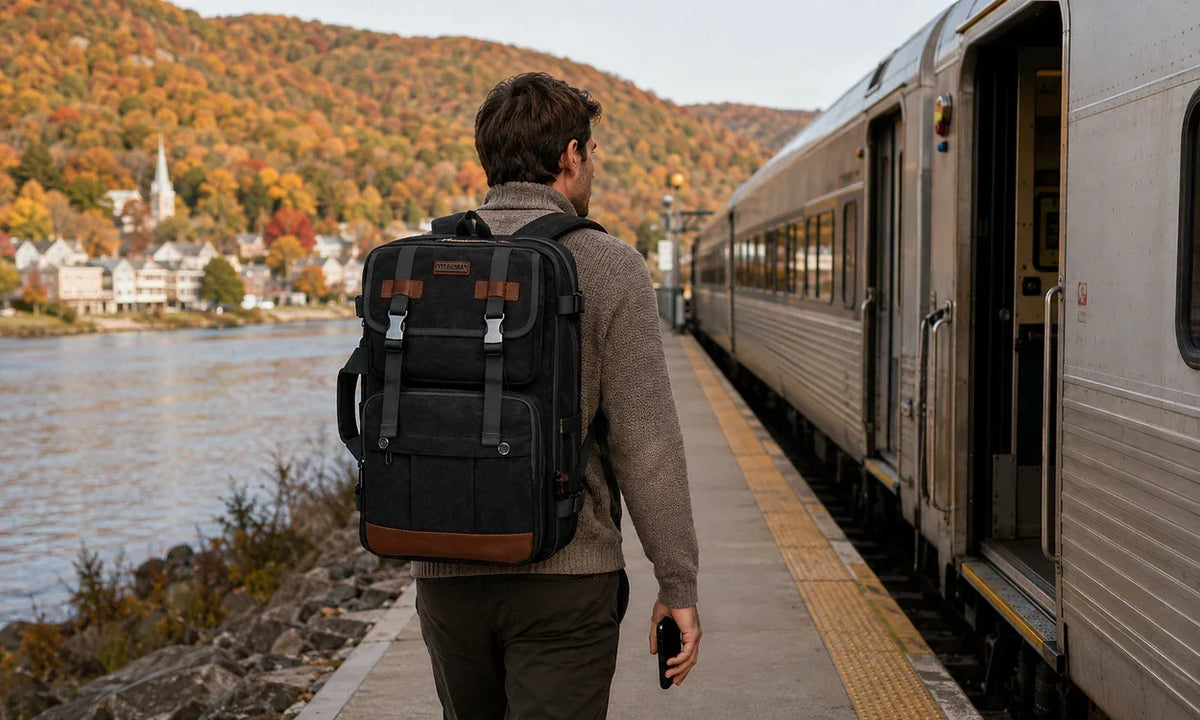
Traveling light matters here because the route includes train platforms, sloped sidewalks, cemetery paths and crowded entry queues. Our comparison of train and budget-airline backpack constraints is useful if Sleepy Hollow is one stop in a longer trip. For this weekend alone, the better question is not maximum capacity; it is whether the bag disappears into the day once the room is available.
The two-zone carry plan
Use the backpack as the weekend container and the crossbody as the timed-event layer. On arrival, both travel together. After check-in, the backpack carries water, umbrella, camera, midlayer and any purchase that should not crush. At night, leave it in the room unless the weather or medical kit genuinely requires the space.

B716: the 30L weekend base
12.6 x 6.7 x 18.5 in; 3.31 lb. The water-resistant nylon body, separate device storage and organization suit a rail weekend. It is smaller than a 40L travel pack, but at 1.465 kg it is not an ultralight hiking pack. Choose it when structure and compartments matter more than minimum empty weight.
View B716
B710: the close-carry night layer
About 7L; 8.5 x 4.8 x 11.3 in; 1.29 lb. Front access and a hidden back pocket suit phone, wallet, tickets, gloves and a small power bank. It can hold an 11-inch tablet, but filling it like a daypack defeats the close-to-body advantage.
View B710If you prefer the crossbody on one shoulder, set the strap and zipper direction before leaving the room; our left- versus right-shoulder sling guide explains why the access side changes comfort in a crowd. Travelers who plan to nest the smaller bag inside the backpack should also read the one-bag versus 1.5-bag framework.
Pack for the warm afternoon and the cold wait
The classic mistake is dressing for the sunny cemetery walk and discovering that the evening includes a stationary queue. Build the clothing around a reversible transition: a breathable base, a light insulating layer and a compact shell. The shell handles wind and a passing shower; the midlayer handles standing still.
- One quick-drying base layer for Saturday
- One midlayer that fits under the shell
- Compact rain shell, not a heavy umbrella alone
- Comfortable shoes with grip for leaves and stone
- Thin gloves and a warm hat for late tours
- Refillable water bottle for the daytime block
- Small power bank and short cable
- One dry bag or zip pouch for damp items
- Medication and ID in the close-carry bag
- Room key separate from the phone wallet
The logic is similar to our rain-to-sun shoulder-season layer system, but the nighttime queue changes the emphasis: warmth while stationary matters more than an extra outfit. If you are unsure whether 30L is too much or too little, use the dimensions and destination method in How to Choose a Backpack rather than relying on liters alone.
Three ways this weekend goes wrong
You book Halloween night because it sounds most authentic
Authentic does not mean comfortable. If the goal is atmosphere, an earlier October weekend can still provide leaves, cemetery tours and night programming with fewer simultaneous events. If Halloween itself is non-negotiable, accept the crowd and remove half the itinerary.
You reserve by attraction name, not address
Sleepy Hollow Country covers more ground than a compact village map suggests. Put every ticketed address into one map before payment. The Blaze location trap is the clearest example, but lodging and historic estates can create the same problem.
You carry the whole weekend after check-in
A full backpack makes narrow interiors, dining and queues less pleasant. The hotel reset is not wasted time; it converts the trip from transit mode to evening mode. Keep the small bag close, secure the phone and ticket, and leave spare clothing behind.
Choose Sleepy Hollow over Salem when you want a Hudson Valley weekend built from separate scenes: morning stone and leaves, an old building in the afternoon, a real meal, then one night story. The place will still be popular. The advantage is that the weekend does not have to feel like one long line.

Partager:
What I Used Every Day During Nine Days in Athens, and What Stayed in My Bag