

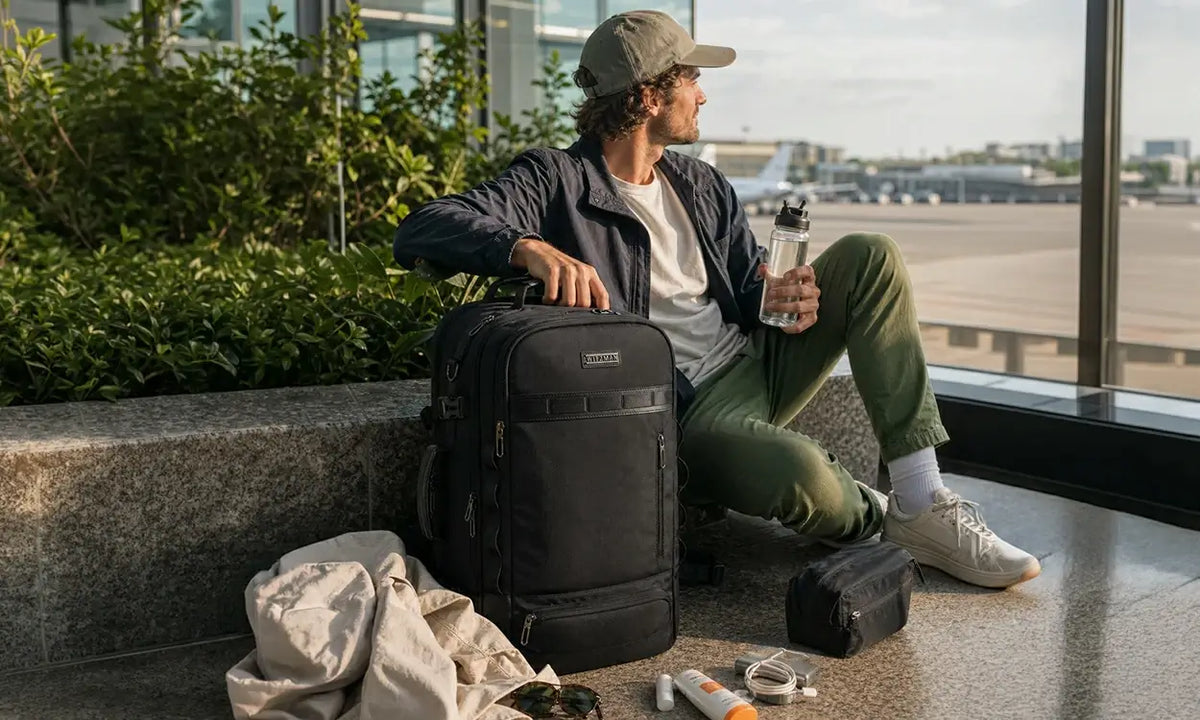
When summer airports get chaotic, your carry-on should work like a delay kit, not just luggage. Pack water support, medication, charging gear, one clean layer, basic hygiene, documents, and a small comfort setup where you can reach them without unpacking the whole bag.
The New Summer Airport Problem
Heatwave flight delays are not only about planes leaving late. They create a chain reaction: hotter terminals, longer gate waits, sudden thunderstorms, missed connections, full customer service lines, and the uncomfortable possibility that your checked bag is somewhere else while you are still at the airport.
Recent summer travel news makes the pattern easy to understand. The Associated Press reported dangerous heat across large parts of the United States. In Europe, thunderstorms disrupted flights at major UK airports. In Texas, San Antonio airport delays were linked to air-conditioning problems at an air traffic control center. The practical lesson is simple: summer air travel now needs a small plan for waiting.
Pack for the Hours Before the Flight, Not Just the Flight
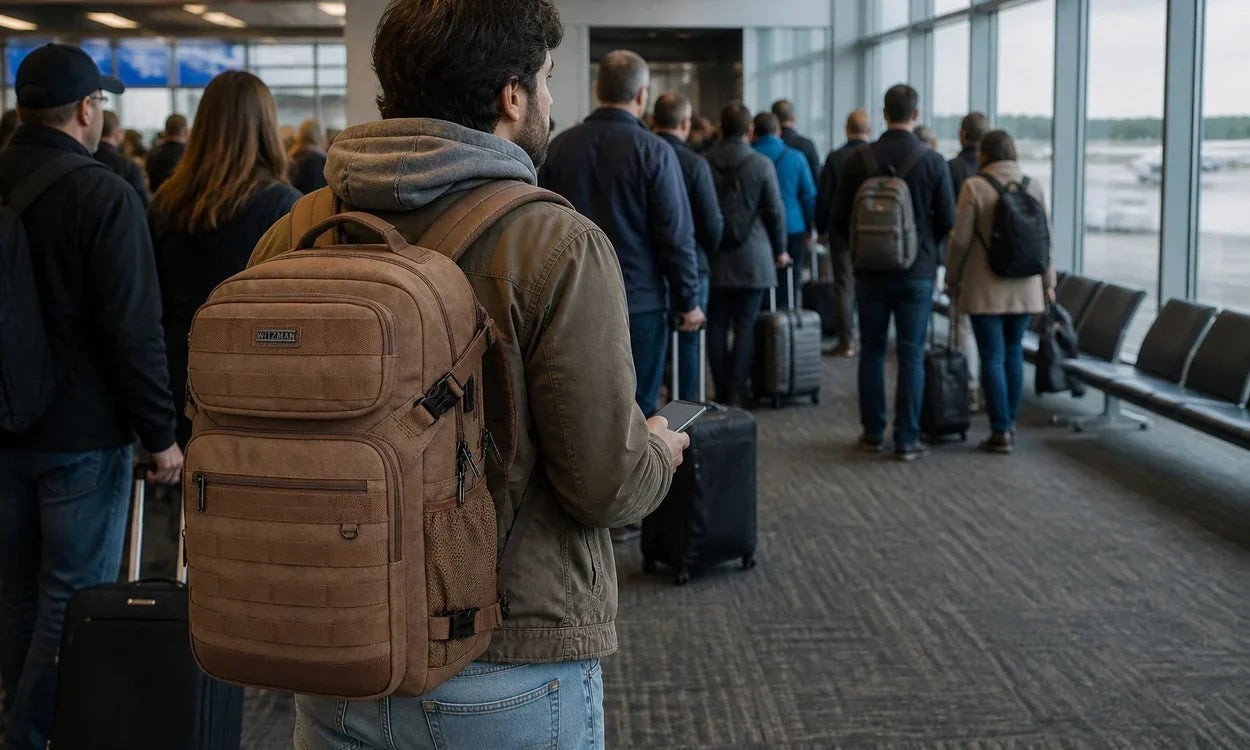
Most carry-on packing lists assume the hard part begins after boarding. During a heatwave delay, the harder stretch may happen before boarding: standing near windows, sitting on carpet, finding an outlet, walking between gates, waiting for a rebooking desk, or trying to keep a child, partner, or tired coworker comfortable.
A good airport delay essentials setup has two layers. The first layer is a small quick-access zone for items you may touch every 10 minutes. The second layer is a deeper carry-on zone for things you may need if the delay becomes a missed connection or overnight stay.
The Four-Zone Carry-On Setup
Zone 1: Heat Control
Empty water bottle, electrolyte packets, cooling towel, sunscreen stick, sunglasses, cap, and a breathable overshirt. The bottle should be empty before security and filled after.
Zone 2: Health and Hygiene
Medication, contact lens supplies, wipes, tissues, hand sanitizer, lip balm, basic pain relief, and one small pouch for anything you do not want buried.
Zone 3: Power and Paperwork
Power bank, charging cable, adapter, headphones, passport, ID, boarding pass, insurance details, and hotel or connection information.
Zone 4: If Tonight Goes Wrong
Clean socks, underwear, a light shirt, compact toiletries, and a foldable dirty-clothes pouch. This is the zone you hope not to use, but will be glad to have.

The Front Pocket Is the Real Survival Space
The most useful airport travel essentials belong in the front pocket, top pocket, or sling bag. If you need to unzip the full clothing compartment every time you want earbuds or lip balm, the bag is working against you.
Keep the fast-grab items together: phone cable, power bank, earbuds, passport, wallet, sanitizer, tissues, SPF, medication, and one snack. Do not put them in five tiny mystery pockets. A delayed flight already creates enough searching.
What to Add When Heat Is the Reason Flights Are Slipping
Heat changes what feels urgent. A thin overshirt can block sun through glass. Wipes feel more useful after a hot rideshare or shuttle. Electrolytes can matter more than a second pair of pants. If you are traveling with older adults, children, or anyone with medical needs, keep the health pouch in the personal item, not in a checked bag.
The National Weather Service heat safety guidance is worth checking before airport travel days because heat risk is not only an outdoor hiking issue. It can affect transit to the airport, curbside lines, shuttle waits, and parking lots.
What to Add When Storms Are the Reason Flights Are Slipping
Summer thunderstorms create a different problem: uncertainty. You may board, deplane, change gates, sit through a ground stop, or discover that the next available flight is tomorrow. Pack a small set of items that lets you stay functional without visiting a store.
- A compact hygiene kit with toothbrush, toothpaste, deodorant, and face wipes.
- A clean shirt or base layer that does not take much space.
- One pair of socks and underwear in a small pouch.
- A light layer for over-cooled airport lounges and late-night hotel shuttles.
- A reusable bag for damp or sweat-worn clothes.
The Personal Item Should Stay Small and Useful
During delays, the personal item is not there to hold more clothes. It is there to reduce friction. If you use a sling or compact crossbody, keep it focused: ID, card, phone, cable, earbuds, medication, tissues, lip balm, and one snack. Anything else can live in the carry-on backpack.
This division matters when boarding suddenly restarts. A well-packed sling lets you stand up fast, move through the line, and keep valuables on your body while the backpack goes under the seat or into the overhead bin.
Delay Packing Map
Where WITZMAN Bags Fit Into This System
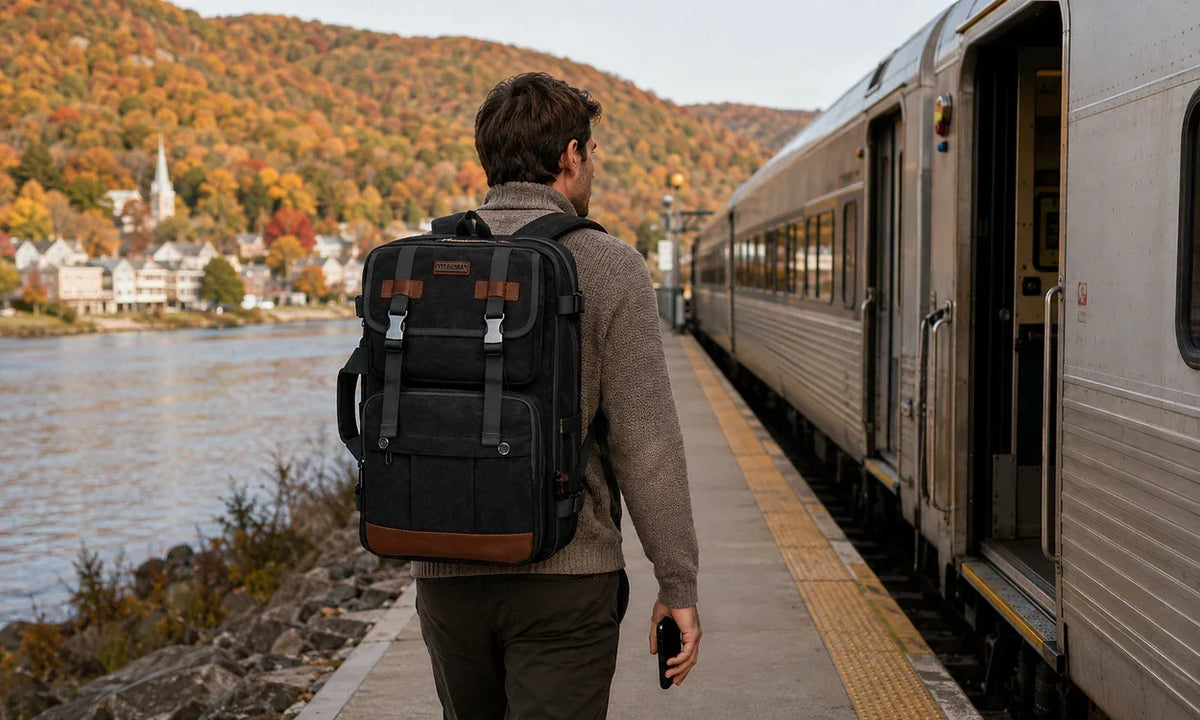
For this scenario, the goal is not to carry the biggest possible bag. It is to separate "need now" from "may need later." A main travel backpack such as B746 can handle clothing, tech, toiletries, and the overnight fallback. A small sling can hold the things you reach for while standing in line.

WITZMAN B746
Men's Carry On Travel Backpack Premium Casual Laptop Bag B746
Use it as the main carry-on when a summer delay turns a short flight into a long gate wait. Its role is clothing, tech, toiletries, a clean layer, and the items you may need if the airline cannot return checked luggage quickly.
36L; 12.5 x 8.5 x 20.5 in; recycled nylon exterior; designed for 2-4 day short travel.

WITZMAN B735
Casual Nylon Chest Bag Triangular Crossbody Sling Bags for Men B735
Use it for the items you keep touching during airport chaos: phone, wallet, passport, boarding pass, lip balm, SPF, earbuds, medication, and a small snack. It keeps the main backpack closed when lines start moving.
16.5 x 10 x 7 in; nylon; medium 10-20L category; lightweight everyday carry design.
Mistakes That Make Airport Delays Worse
Putting medicine in checked luggage. If it matters to your health, it belongs in the cabin.
Carrying one giant tech tangle. Keep a cable and power bank together, not loose across three pockets.
Burying the clean layer. The spare shirt or overshirt should be easy to reach if the terminal is too hot, too cold, or you get stuck overnight.
Overpacking snacks but forgetting water strategy. Bring an empty bottle through security, then fill it. In summer airport travel, hydration access beats extra bulk.
Questions at the Gate
Should I pack for an overnight delay in my carry-on?
Yes, but keep it minimal: one clean shirt, socks, underwear, toothbrush, toothpaste, deodorant, and essential medication. You do not need a full second outfit unless your trip requires it.
Is a backpack better than a suitcase during heatwave flight delays?
A suitcase is fine for rolling through terminals, but a travel backpack is easier when seats are full, lines move suddenly, or you need both hands free. The best choice depends on weight and comfort.
What should stay in a sling bag or crossbody?
Keep valuables and frequent-use items there: passport, wallet, phone, earbuds, medication, lip balm, tissues, and a small snack. The sling should not become a second overloaded bag.
Useful Next Reads
For size concerns, read the under-seat fit guide. For one-bag travelers, see how to pack for 7 days in one backpack. For weather-related summer trips, pair this with the summer rainy season packing guide. You can also browse travel backpacks and sling bags for the two-bag airport setup.
A chaotic summer airport rewards the traveler who can reach the right thing quickly. Pack the carry-on for uncertainty, keep the personal item light, and make the first pocket work harder than the rest of the bag.

Partager:
Coolcation Packing: What to Pack When Summer Travel Is No Longer Hot
Duffle Bag Dimensions and Size Chart: 20L to 60L Explained