

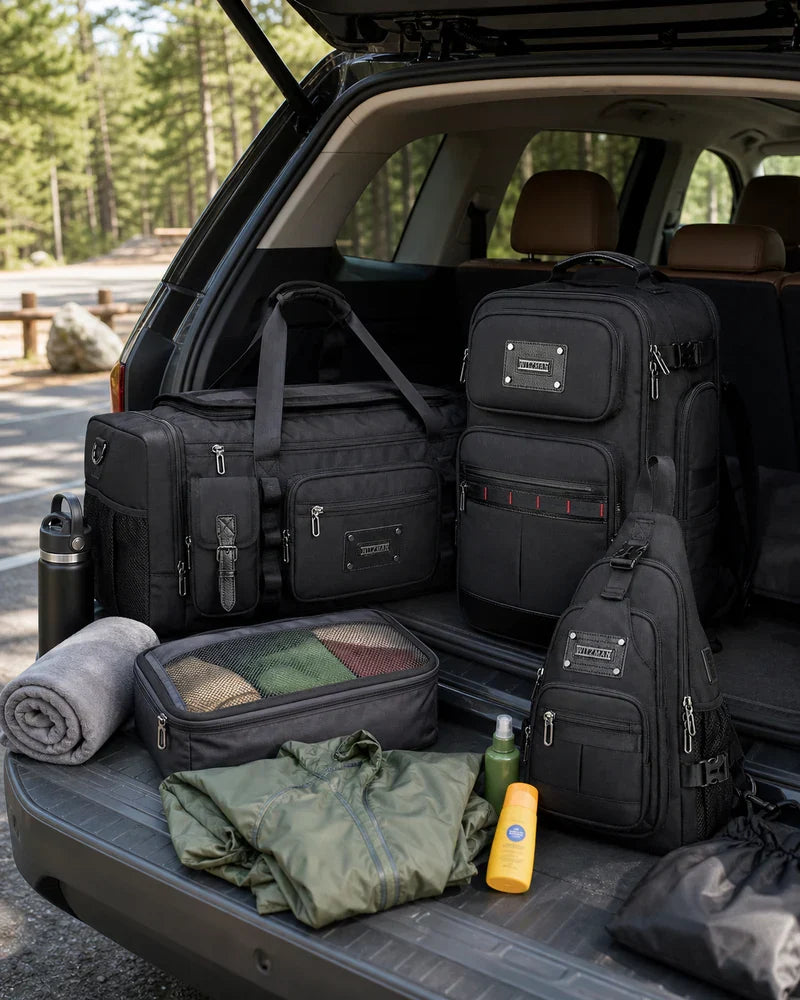
Quick answer: smart road trip packing works best when each bag has a job. Put bulky and messy items in the duffel, keep day-use outdoor gear in the backpack, and wear a small crossbody travel bag for phone, wallet, keys, and stop-by-stop essentials. That three-bag system keeps the car cleaner, protects leg room, and makes every gas stop, campsite arrival, and short hike less chaotic.
For self-driving camping, cabin weekends, and nearby outdoor escapes, the packing problem is rarely just “Can everything fit?” The real issue is access. Modern travelers need a system that separates what stays in the trunk from what leaves the car and what stays on the body. A single giant bag can hold a lot, but it usually turns into a dig-and-dump situation by the second stop.
Key Takeaways
- Use an outdoor duffel bag as the trunk base: clothes, shoes, towel, toiletries, and dirty laundry.
- Use a travel backpack for anything you may carry away from the car: rain layer, water, snacks, first aid, tech, and an extra layer.
- Use a crossbody travel bag for high-frequency items: phone, wallet, keys, sunglasses, campsite pass, charging cable, and hand sanitizer.
- Keep dirty, wet, and scented items away from electronics and food.
- Pack by access frequency, not just by category.

Start With the Three-Zone Rule
The cleanest road trip packing system is built around three zones: trunk, seat, and body. The trunk zone is for gear you need at the destination. The seat or floor zone is for gear you might grab during the day. The body zone is for anything that should never be buried under jackets, grocery bags, or camping gear.
This is why the duffel, backpack, and crossbody combination works so well. It matches how a road trip actually unfolds: long driving stretches, quick rest stops, scenic pullouts, rainy moments, campsite unloading, and the end-of-day reset when clean and dirty items start mixing.
The Duffel: Your Trunk Basecamp Bag
The duffel should hold the things you do not need while seated in the car. For a short camping trip or weekend cabin escape, that usually means clean clothes, sleepwear, spare socks, sandals, camp shoes, towel, toiletry pouch, and a laundry pouch. If the trip includes gym time, lakeside swimming, or muddy trails, the duffel is also where wet and dirty items should end up after use.
A good outdoor duffel bag is not just a large open cavity. For road trips, it should make separation easy. Shoes should not rub against clean shirts. A damp towel should not sit beside a laptop charger. Toiletries should be easy to remove when you arrive late and only want to carry one thing into the bathroom.
Pack This in the Duffel
- Clothes for the full trip, packed by outfit or day.
- Camp shoes, spare sneakers, sandals, or slippers.
- Toiletry kit, towel, grooming items, and sleepwear.
- Dirty-clothes pouch or packing cube for worn layers.
- Extra hoodie, fleece, or jacket that stays in the trunk until needed.
Do not put passports, car keys, wallet, daily medication, or campsite check-in documents deep in the duffel. Those belong in the crossbody or a clearly accessible backpack pocket. The duffel should be spacious and organized, but it should not become your glove box.
The Backpack: Your Leave-the-Car Bag
The backpack is for moments when the road trip stops being a drive and becomes an outdoor day. It should be ready for short hikes, viewpoint walks, grocery runs, rainy parking lots, and coffee-shop work sessions. That means it should carry useful layers and supplies without forcing you to pull apart the trunk.
In a practical road trip packing setup, the backpack is not the overflow bag. It is the active movement bag. Put the rain shell, water bottle, snacks, compact first-aid kit, power bank, camera, sunscreen, bug spray, and spare layer here. If you bring a laptop or tablet for work, keep those items in a dedicated tech zone rather than inside a duffel with shoes and toiletries.
Pack This in the Backpack
- Rain jacket or wind shell for sudden weather changes.
- Water bottle, snacks, and small trash pouch.
- First-aid basics, sunscreen, bug spray, and wipes.
- Power bank, cable, camera, tablet, or laptop if needed.
- Map, reservation printout, or local permit backup.
If your backpack also carries electronics, be careful with liquids and scented toiletries. Keep bug spray and sunscreen upright in a pouch, and move soaked clothes back to the duffel's wet/dirty zone at the end of the day.
The Crossbody: Your Stop-by-Stop Control Center
A crossbody travel bag solves a different problem from both the duffel and the backpack. It is not for packing the trip. It is for avoiding the constant “Where did I put that?” cycle at gas stations, trailheads, parking lots, and campsite check-in counters.
Use it for items you touch repeatedly: phone, wallet, keys, sunglasses, lip balm, charging cable, small sanitizer, toll ticket, parking pass, and campsite access card. On a road trip, this small bag can save more time than a bigger bag because it stays with you when you step away from the car.
Pack This in the Crossbody
- Phone, wallet, keys, and cards.
- Sunglasses, lip balm, small sanitizer, and tissues.
- Parking ticket, trail permit, cabin key, or campsite pass.
- Earbuds and short charging cable.
- Any small item you do not want to leave in the car unattended.
Do not overload the crossbody with a full water bottle, heavy camera, or bulky jacket unless the bag is designed for that. Once it becomes heavy, it stops being the fast-access layer and starts competing with the backpack.
Road Trip Packing Table: What Goes Where
| Item | Duffel | Backpack | Crossbody |
|---|---|---|---|
| Clean clothes | Best place | Only one spare layer | No |
| Shoes or sandals | Best place | No, unless trail shoes are needed | No |
| Rain shell | Backup only | Best place | No |
| Phone, wallet, keys | No | Backup pocket only | Best place |
| Toiletries | Best place | Small day-use items only | No |
| Snacks and water | Bulk backup | Best place | Small snack only |
| Dirty clothes | Best place in separate pouch | Avoid if carrying tech | No |
Expert Insight: Pack by Friction, Not by Volume
The common road trip mistake is packing by volume: put the biggest things in the biggest bag and squeeze the rest wherever it fits. A better method is packing by friction. Ask, “When will I need this, and what will be in the way?” If the answer is “at every stop,” it belongs in the crossbody. If the answer is “when I leave the car,” it belongs in the backpack. If the answer is “when we arrive,” it belongs in the duffel.
This one mental shift prevents most road trip clutter. It also protects leg room because passengers are not surrounded by half-open bags, loose hoodies, charging cables, and snack wrappers. For a deeper warm-weather outdoor checklist, pair this setup with the summer outdoor travel guide.
Recommended WITZMAN Bags for This Road Trip System
These recommendations are matched to the article's actual packing roles: trunk storage, off-car movement, and on-body quick access. They are not random product placements.

Trunk duffel zone
B717 - Large Travel Duffel Bag 54L Men Carry On Weekender Bag B717
Use the duffel as the road-trip base bag: clothes, shoes, towel, toiletry kit, and dirty layers stay in one place instead of spreading through the car.
- 54L capacity with nylon construction
- Shoe compartment and wet/dry compartment
- Duffel or shoulder carry for moving from car to cabin
From USD 95.86

Leave-the-car backpack
B737 - Nylon Travel Backpack for Men TSA Luggage Laptop Backpacks B737
Use the backpack when the road trip turns into a trail stop, lake walk, viewpoint, or cafe work session.
- 38L capacity for 2-4 day travel use
- 180 degree clamshell opening
- Wet item storage plus laptop and tablet protection
From USD 158.76

Always-on crossbody bag
B735 - Casual Nylon Chest Bag Triangular Crossbody Sling Bags For Men B735
Use the crossbody travel bag for phone, wallet, keys, sunglasses, parking pass, and the small things you touch at every stop.
- 12L compact sling format
- Multi-pocket organizer and hidden anti-theft pocket
- Adjustable crossbody strap for hands-free movement
From USD 53.86
How to Set Up the Car Before You Leave
Place the duffel flat in the trunk with the shoe or dirty-item side facing outward. That way, you can reach shoes, towel, and laundry without lifting the whole bag. Keep the backpack on top of the duffel or behind the driver/passenger seat depending on how often you will stop. Wear the crossbody or place it in the same front-seat location every time.
For camping and nearby outdoor travel, add one small “mess buffer” to the trunk: a reusable tote or dry pouch for wet items that are not ready to go back into the duffel. This prevents the end-of-day scramble where muddy socks, sunscreen, towels, and snack packaging all compete for the same space.
Arrival Routine: The Five-Minute Reset
When you reach the campsite, cabin, or hotel, do a five-minute reset before unpacking everything. Move clean clothes to one side of the duffel. Put worn items into the dirty pouch. Refill the backpack with tomorrow's water, rain layer, and snacks. Empty receipts and wrappers from the crossbody. This is the difference between a bag system that works once and a bag system that works for the whole weekend.
If your trip includes gym sessions, swimming, or muddy hikes, the article how to pack shoes, clothes, and toiletries in one duffel bag gives a more detailed shoe and wet/dry separation method.
Common Mistakes to Avoid
- Putting all valuables in the backpack: the backpack may leave your body at viewpoints, picnic tables, or rest stops. Keep core valuables in the crossbody.
- Using the duffel for “maybe later” items: if you might need it during the drive, it should not be buried under clothes.
- Letting the backpack become the trash bag: keep a small trash pouch separate so food wrappers do not mix with tech or layers.
- Overpacking the crossbody: once it gets heavy, you will stop wearing it, which defeats its purpose.
- Skipping the dirty-clothes plan: by day two, clean clothes and worn layers need a clear boundary.
Frequently Asked Questions
What goes in a duffel bag for a road trip?
Put clothes, shoes, toiletries, towel, spare layers, and dirty-clothes storage in the duffel. It should act as the trunk base bag, not the place for keys, wallet, or items you need at every stop.
Should I use a backpack or duffel for road trip packing?
Use both if the trip includes outdoor stops. The duffel handles trunk storage and bulk items, while the backpack carries the gear you take away from the car: water, rain layer, snacks, first aid, and tech.
Is a crossbody travel bag useful for road trips?
Yes. A crossbody travel bag is useful because it keeps phone, wallet, keys, sunglasses, parking pass, and campsite documents close without opening the trunk or digging through a backpack.
How do I keep dirty clothes and shoes separate in the car?
Use a duffel with dedicated shoe or wet/dry storage, then add a laundry pouch for worn layers. Keep wet towels and muddy socks away from electronics, food, and clean clothes.
What size bag setup is practical for a weekend road trip?
A practical setup is one medium-to-large duffel for trunk storage, one structured travel backpack for day movement, and one compact crossbody for valuables and quick-access items. The exact capacity depends on trip length, weather, and whether you are camping or staying indoors.
In Summary
The best road trip packing system is not one bag that does everything. It is a clear division of labor: duffel for trunk storage, backpack for off-car activity, and crossbody for always-on essentials. That setup makes outdoor duffel bag organization easier, keeps the car cabin calmer, and helps every stop feel less like unpacking the entire trip.

Share:
Summer Outdoor Travel Guide: Heat, Rain, Bugs, and Dirty Clothes
Weekend Bag vs Travel Backpack: Which Works Better for Family Trips?