

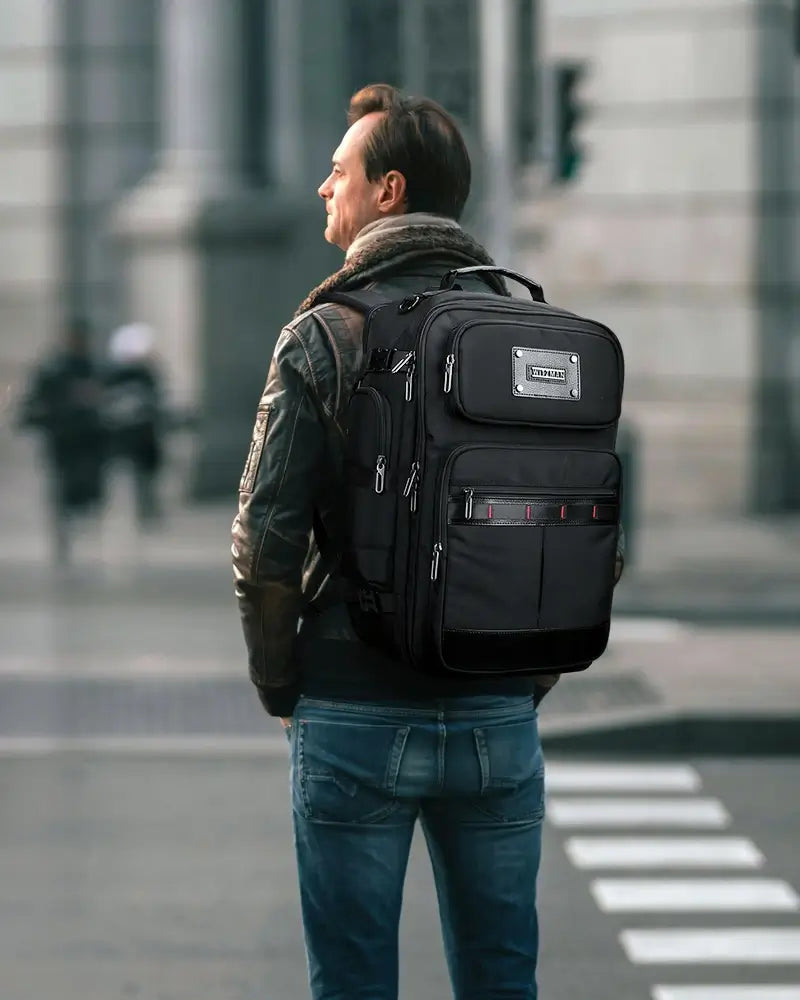
For decades, the universal symbol of international travel was a rigid rolling suitcase effortlessly gliding across polished airport terminal floors. It looks remarkably sophisticated—until you step outside the controlled oasis of the arrival hall. The exact second you encounter the realistic terrain of European cobblestones, narrow subway turnstiles, or multi-tiered transit staircases, that rolling convenience instantly morphs into an exhausting physical liability.
Executive Summary: Why Make the Switch?
Switching from a traditional suitcase to a high-performance travel backpack eliminates an average of 7.5 lbs of dead tare weight, bypasses carousel wait times (saving ~60 minutes per flight), and avoids ancillary baggage fees that routinely exceed $50–$80 per leg on major global airlines. Modern axial-loading harness systems transfer 80% of cargo weight to your hips, granting 100% hands-free physical autonomy.
After logging well over 100,000 air miles spanning dense urban metropolises and rugged coastal pathways across North America and Europe, I made a non-negotiable decision: I permanently retired my rolling luggage. By switching exclusively to premium travel backpacks, I optimized my packing metrics and fundamentally elevated my transit speed. Below is the unvarnished, data-backed operational breakdown of why moving to a single-bag carry-on system will completely redefine your journey.
Suitcase vs. Travel Backpack: The Hard Metrics Showdown
Rather than relying on abstract subjective feelings, let's look at the concrete physical and economic data comparing standard premium carry-on rolling luggage against modern, structured travel backpacks.
| Performance Metric | Traditional Hard-Shell Suitcase | Premium Travel Backpack | The Winner |
|---|---|---|---|
| Average Tare (Empty) Weight | 7.5 lbs – 10.0 lbs (Hardware, wheels, & heavy frame) |
2.5 lbs – 4.0 lbs (Lightweight structural fabrics) |
Backpack (+5 lbs usable payload) |
| Cobblestone & Stair Pace | Walking speed drops by ~30%; high wheel failure risk | 100% unimpeded natural walking pace | Backpack (Absolute mobility) |
| Airline Ancillary Fees | Frequent targets for $50-$80 overhead or checked fees | Routinely qualifies as free carry-on or personal item | Backpack (Massive cost savings) |
| Hands-Free Autonomy | Zero. One hand is continuously tethered to the handle | Total hands-free operation for navigation, coffee, or family | Backpack (Reduced transit friction) |
| Packing Accessibility | Requires laying flat on the floor to fully open | 180° Clamshell opening with modular packing cubes | Tie (Parity achieved via Clamshell) |
| Biomechanical Impact | Asymmetrical spinal torque; prolonged wrist strain | Symmetrical axial loading centered directly on the hips | Backpack (Superior posture) |
The Hidden Cost of Wheels: Infrastructure Realities
The fundamental flaw of rolling luggage is that wheels demand perfectly uniform infrastructure. According to consumer transit reports, luggage wheel failure and jammed telescoping handles rank among the primary equipment-related triggers for acute travel frustration. When navigating public transit mazes like the London Underground or historic districts in Rome, travelers with rolling bags are forced to continuously hunt for elevators—which are frequently out of service or positioned completely out of the direct walking route.
"You aren't truly traveling light if one of your hands is permanently occupied pulling an anchor behind you. Hands-free transit changes your entire psychological posture."
Furthermore, global airline revenue models have forcefully pivoted. Data published by the International Air Transport Association (IATA) highlights that international carriers rely heavily on strict overhead cabin monetization. Because soft-sided premium backpacks feature internal and external compression straps, they can compress to squeeze into tight overhead bins or slip seamlessly beneath aircraft seats. Suitcases, conversely, are the absolute first items gate agents target for forced gate-checking when overhead bins reach capacity.
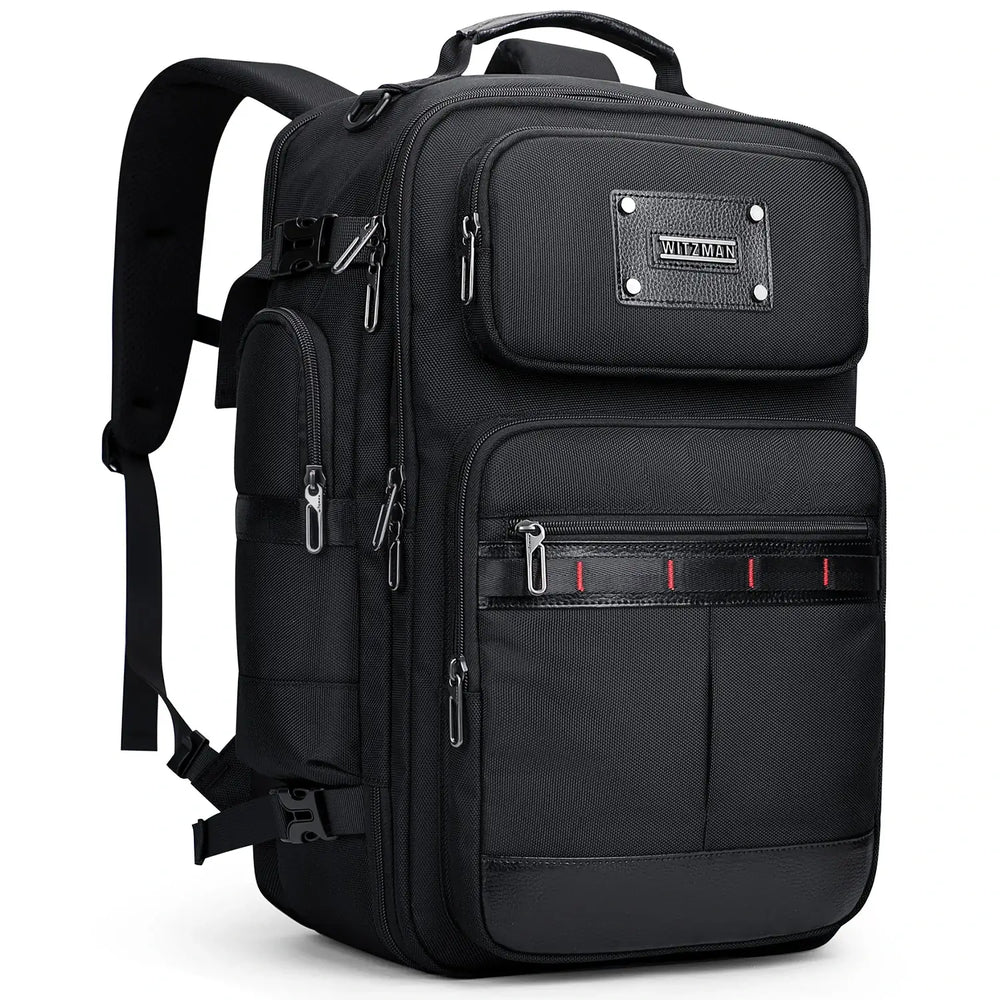
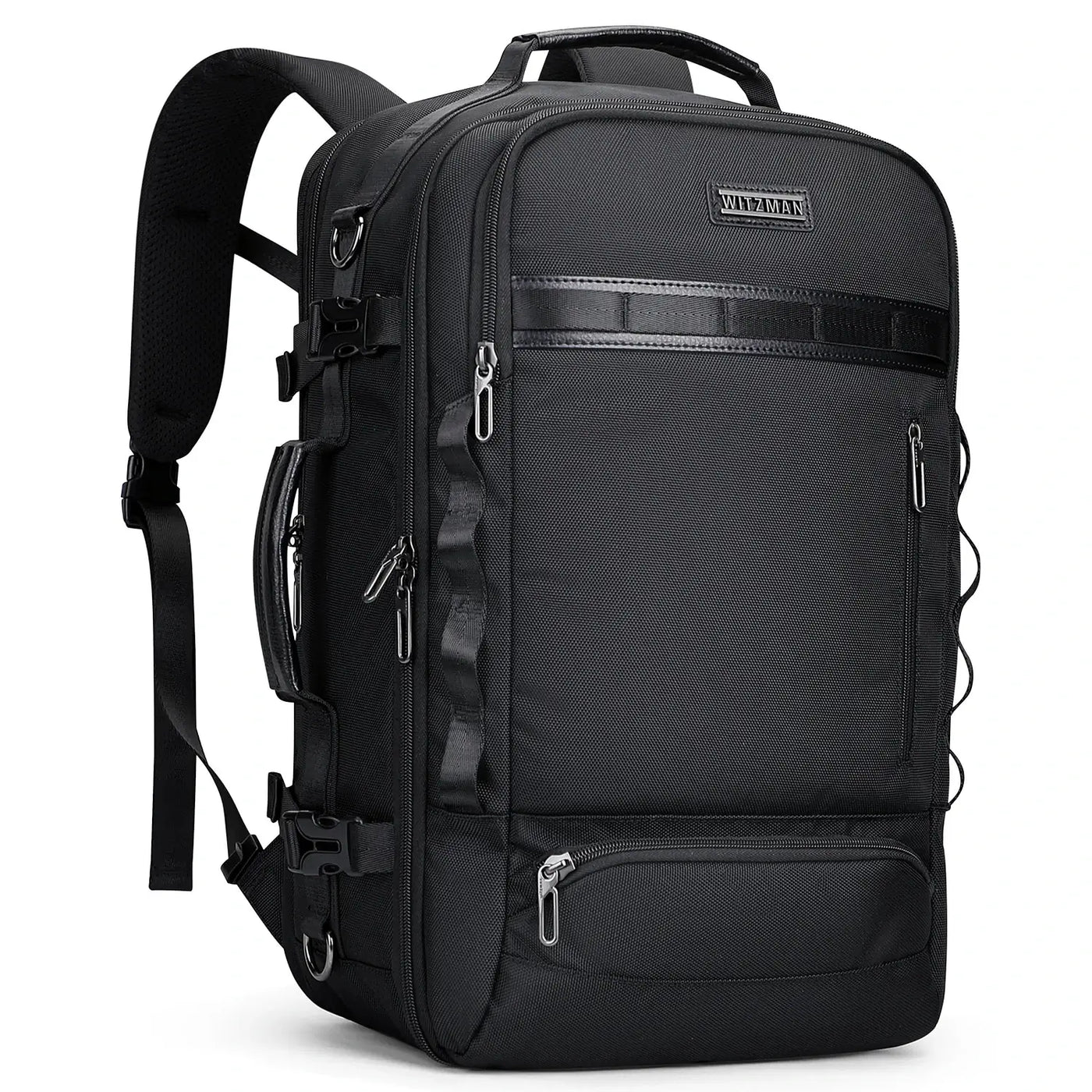
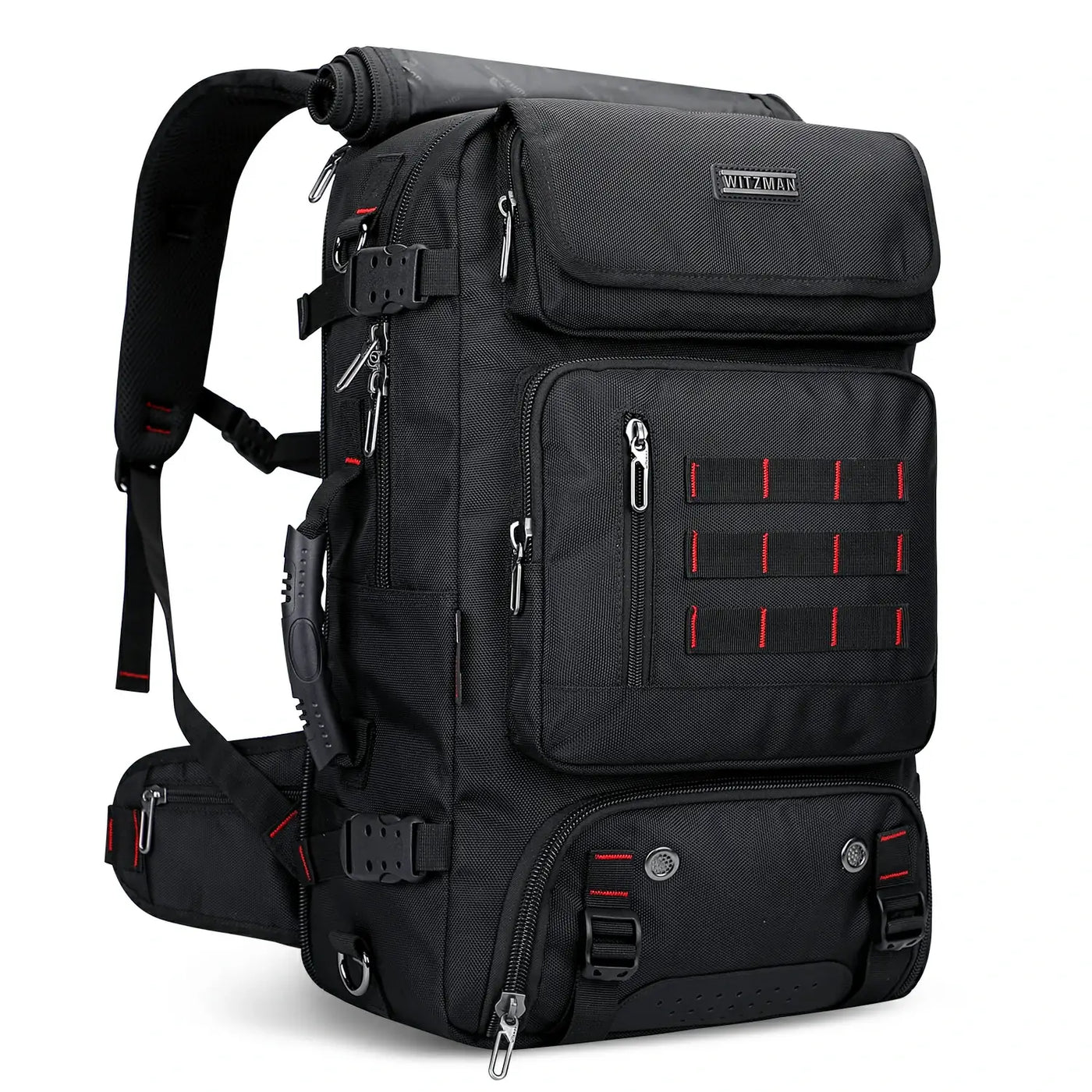
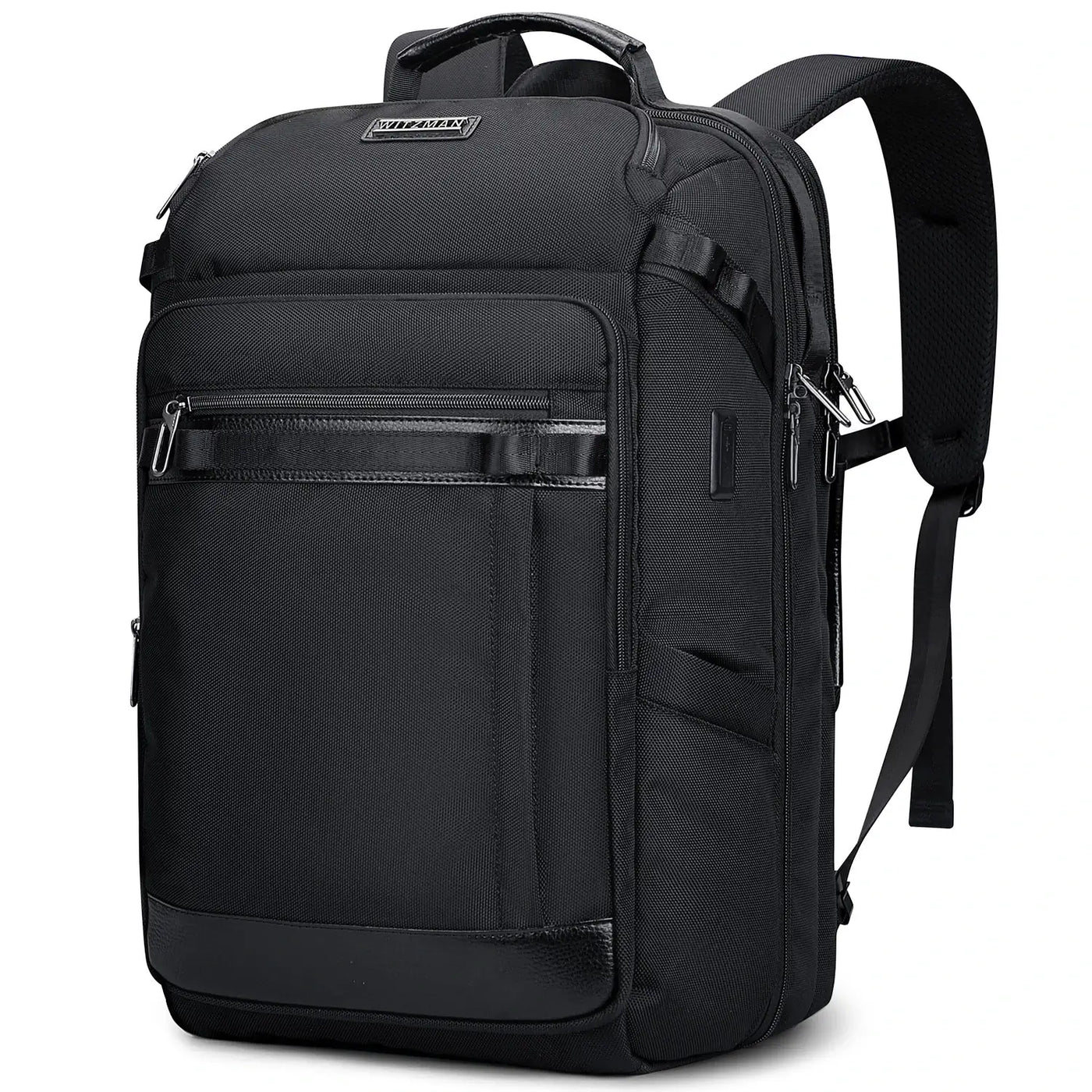
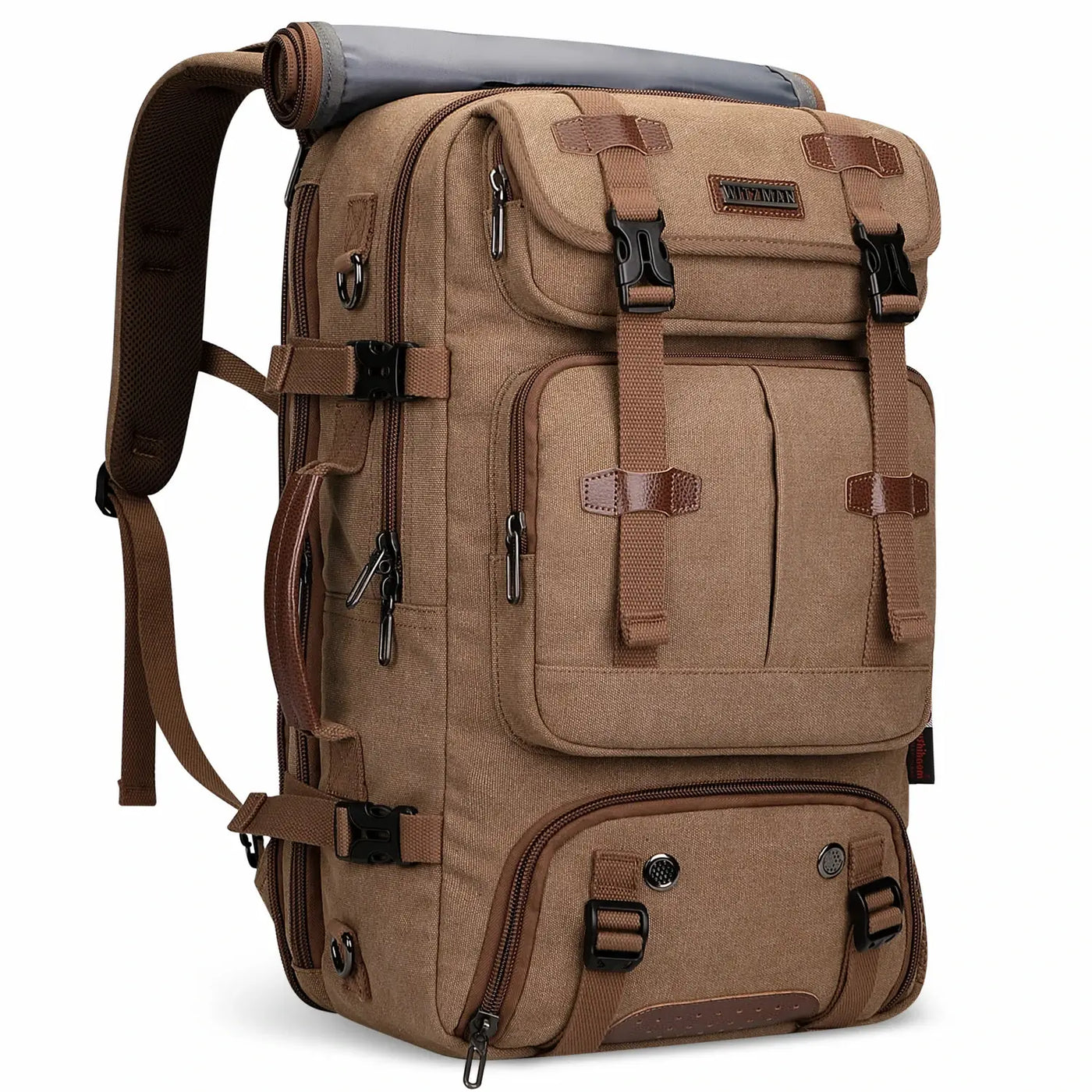
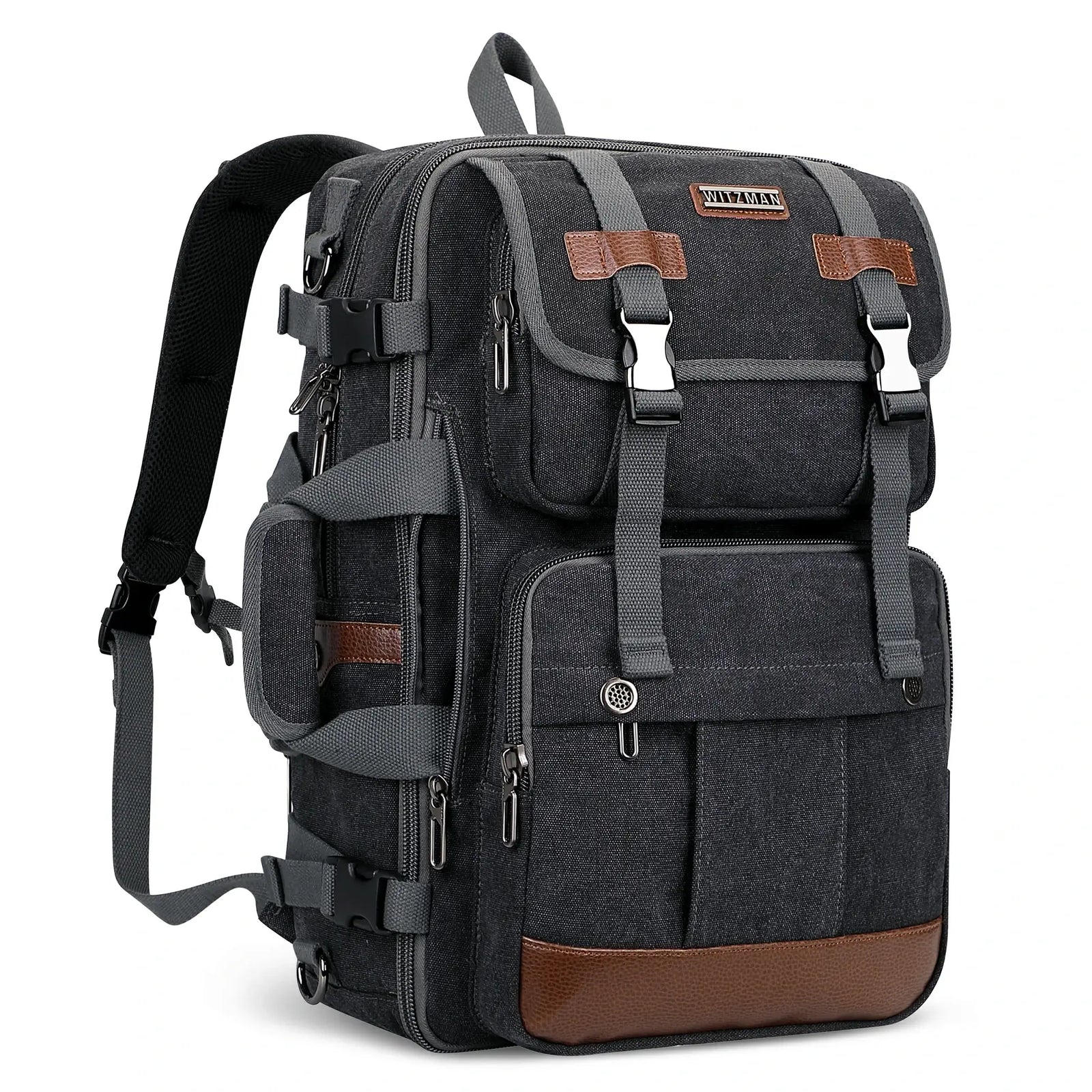
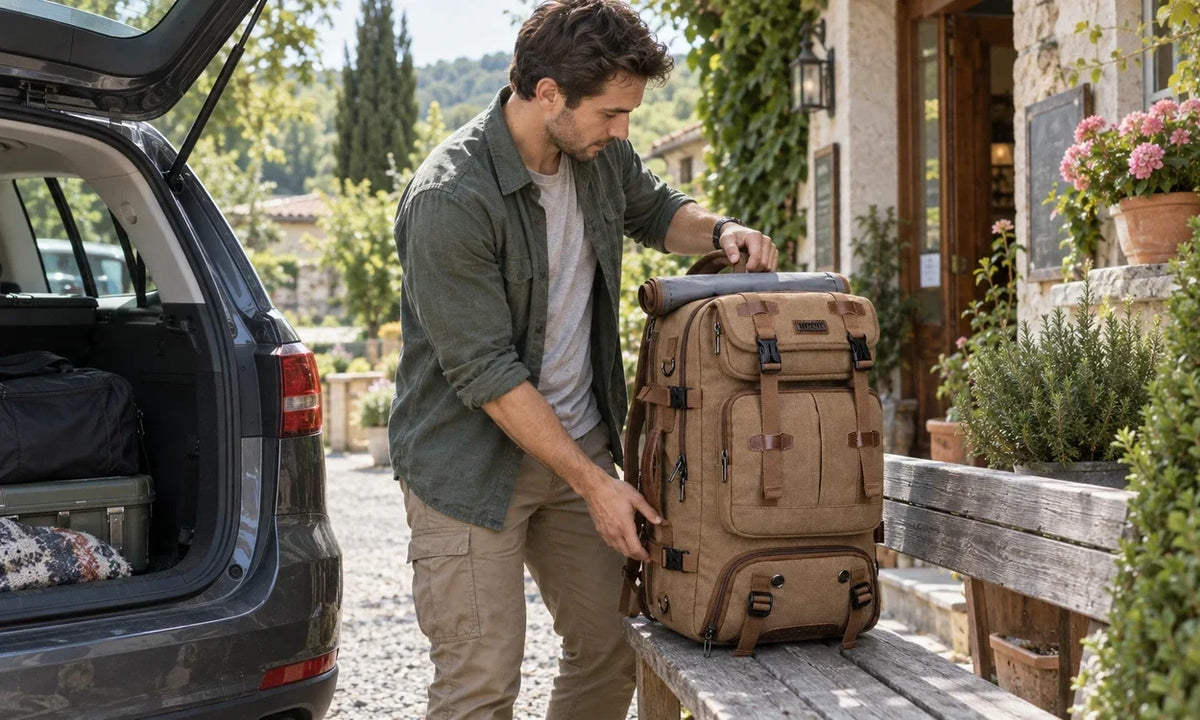
Executing a flawless transition from rolling luggage to a systematic one-bag carry-on setup requires uncompromising hardware. Using an unstructured daily gym bag will result in severe back strain and wrinkled garments. You require engineered travel architecture featuring dedicated load distribution, extreme abrasion resistance, and compartmentalized accessibility. Here are six shoppable, highly optimized hybrid solutions from Witzman built directly to facilitate this transition:
Biomechanical Engineering: Axial Loading vs. Asymmetrical Pull
A residual hesitation preventing suitcase loyalists from adopting backpacks centers entirely on a misunderstanding of physical strain. Many assume carrying thirty pounds on their back will naturally induce more physical fatigue than dragging it on wheels. However, modern spinal ergonomics and physical therapy assessments present a profoundly different reality focused on skeletal alignment.
Pulling a rolling luggage trunk continuously exerts asymmetrical torque across your back. Your shoulder girdle is forced out of horizontal alignment with your pelvis as one arm stretches backward. This leverage forces your lumbar spine to absorb micro-shocks obliquely, accelerating lower back muscle fatigue during long walks.
Conversely, premium professional travel backpacks rely on **axial loading**—distributing physical cargo weight perfectly symmetrically across your body's innate center of gravity. Premium collections integrate advanced harness systems directly inspired by alpine mountaineering technology:
- Padded Load-Bearing Hip Belts: When securely fastened, a structural hip belt redistributes up to 80% of total pack weight directly onto the robust iliac crest of your hip bones. Your lower body houses the largest, most tireless muscle groups, allowing you to carry substantial payloads for hours without straining sensitive trapezius or shoulder muscles.
- The 180° Clamshell Access: Traditional top-loading hiking packs failed in commercial travel because retrieving items at the bottom required dumping out the entire bag. Witzman integrates uncompromised clamshell designs that unzip fully flat around the perimeter. This engineering feature achieves absolute operational parity with open suitcases, letting you utilize structured packing cubes to access specific layers instantly.
The Reality Check: When Does a Suitcase Still Win?
To preserve complete editorial integrity and E-E-A-T authority, it is vital to acknowledge that travel backpacks are not absolute universal replacements for every demographic. If your specific itinerary dictates carrying delicate, highly structured evening gowns or stiff tuxedos requiring zero multi-folding, or if personal skeletal constraints prevent bearing localized weight on your torso, a robust multi-directional spinner luggage piece remains a critical asset.
However, for the vast majority of dynamic commercial and leisure itineraries—spanning complex cross-border transits, multi-city transport transfers, and unpredictable urban terrain—the strategic speed, reduced fiscal footprint, and ultimate physical agility provided by a premium professional backpack radically surpass the passive utility of a rolling box.
Frequently Asked Questions (FAQ)
Review structured operational answers to common inquiries regarding carry-on regulations and packing efficiency below:

Share:
Crossbody Bags for Men: Streamlined Design for City Exploration
What NOT to Pack: Common Mistakes to Avoid When Traveling