

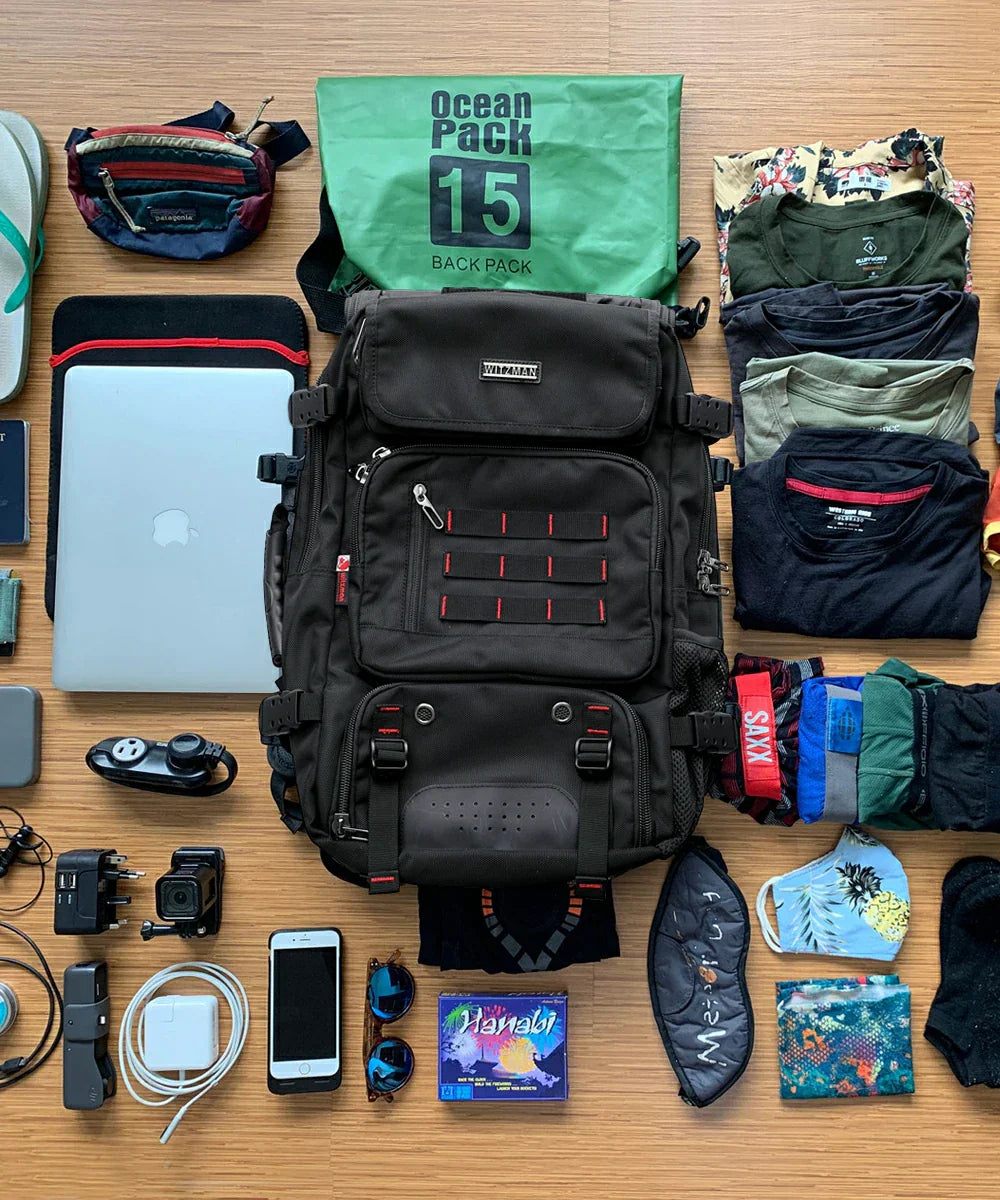
Introduction: Why Packing Smart Matters
Air travel can be stressful, but your luggage doesn’t have to be. A carry-on backpack, when packed strategically, saves you time, money, and hassle. You skip baggage claim, avoid lost luggage risks, and glide through airports with everything you need at your fingertips.
This guide walks you through carry-on size rules, step-by-step packing methods, TSA-friendly layouts, and a real 1-week sample packing list—plus expert tips to maximize comfort and efficiency.
1. Understand Carry-On Size & Airline Rules

Before you pack, check the official carry-on requirements. Most airlines follow similar guidelines:
-
U.S. Airlines (Delta, United, American, Southwest): 22 x 14 x 9 in (56 x 36 x 23 cm).
-
European Airlines (Ryanair, easyJet, Lufthansa): 21.5 x 15.5 x 9 in (55 x 40 x 23 cm). Weight often capped at 7–10 kg.
-
Asian Airlines (ANA, Singapore Airlines, JAL): Similar to Europe, strict on weight checks.
👉 Pro Tip: Choose an expandable carry-on backpack that can compress for stricter airlines and expand when you need more space.
2. Choose the Right Carry-On Backpack
Not all backpacks are made equal. A good travel backpack should be:
-
Size-Compliant: Fits under seat or overhead bins.
-
Expandable: Adjustable capacity for longer trips.
-
TSA-Friendly: Lay-flat laptop compartment for faster security checks.
-
Organized: Multiple compartments for clothes, tech, and toiletries.
-
Durable: Reinforced seams, padded straps, and water-resistant fabric.
-
Comfortable: Ergonomic straps and breathable back padding.

💡 Witzman carry-on backpacks combine TSA-friendly designs, anti-theft features, and expandable compartments—perfect for business or leisure trips.
3. Step-by-Step Packing Method
Step 1: Clothing First

-
Build a capsule wardrobe (neutral colors, versatile outfits).
-
Use the 1-2-3-4-5-6 rule: 1 hat, 2 pairs of shoes, 3 pants, 4 shirts, 5 pairs of socks, 6 pairs of underwear.
-
Roll clothes instead of folding to save space.
Step 2: Use Packing Cubes
-
Tops in one cube, bottoms in another, underwear in a small cube.
-
Compression cubes save even more space.
Step 3: Toiletries in TSA-Approved Bag

-
Liquids ≤100ml in 1-quart clear bag.
-
Prioritize essentials: toothpaste, deodorant, face wipes.
-
Switch to solid toiletries (bar soap, solid shampoo) for space efficiency.
Step 4: Tech Essentials
-
Keep laptop/tablet in padded sleeve.
-
Store chargers, adapters, headphones in a tech pouch.
-
Carry a universal adapter for international trips.
Step 5: Travel Documents & Quick Access
-
Passport, boarding pass, and ID → front pocket.
-
Emergency cash & card → hidden anti-theft pocket.
-
Pen for customs → side pocket.
4. Sample 1-Week Carry-On Packing List
Clothing:
-
3 T-shirts, 2 button-ups, 2 pants, 1 shorts, 1 jacket
-
5 underwear, 5 socks, 1 sleepwear
-
1 sneakers (worn), 1 loafers (packed)
Toiletries:
-
Toothbrush, toothpaste, deodorant, shampoo, razor, wipes
Tech:
-
Laptop, phone, chargers, headphones, power bank, adapter
Essentials:

-
Passport, sunglasses, reusable water bottle, foldable bag
👉 Everything fits neatly in a 40L carry-on backpack.
5. TSA-Friendly Features You’ll Appreciate
-
Lay-flat laptop sleeve → no need to remove devices.
-
Liquids pouch compartment → grab-and-go at security.
-
Top quick-access pocket → ID and boarding pass within reach.
These features save minutes at every checkpoint, keeping travel stress-free.
6. Mistakes to Avoid
-
Overpacking “just in case” items.
-
Ignoring weight rules (especially in Europe/Asia).
-
Poor organization → tangled chargers, wrinkled clothes.
-
No space left → always leave 10–15% for souvenirs.
7. Final Takeaway
Packing a carry-on backpack is an art. The right bag plus smart packing techniques = stress-free, confident travel.
👉 Explore Witzman’s Carry-On Backpack Collection with expandable storage, TSA-friendly layouts, and durable construction—your best partner for air travel.


Aktie:
The Most Durable Materials for Men’s Travel Bags
Sling or Messenger? Choosing the Best Everyday Bag for Your Commute