

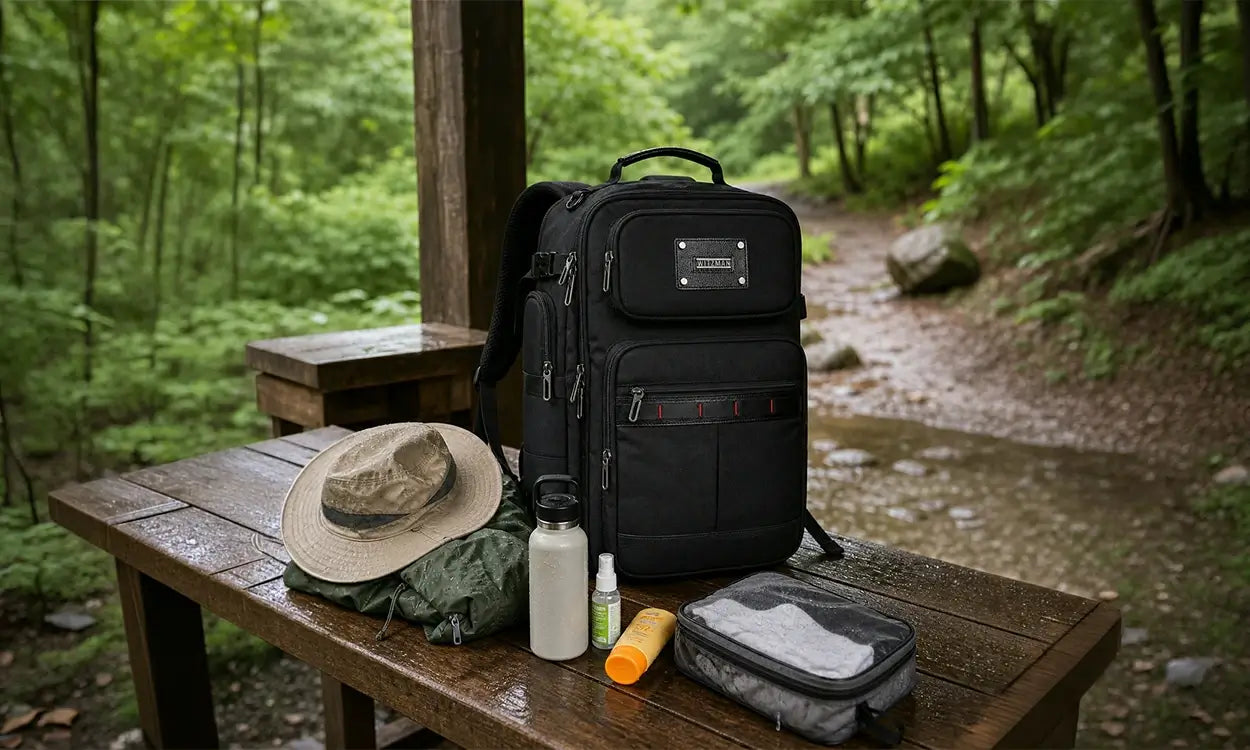
Summer outdoor travel is not just a lighter packing list for modern travelers. Heat changes how much water you need, rain changes how you protect electronics and clean clothes, bugs change what you keep within reach, and sweaty clothing changes how fast a neat bag becomes unpleasant.
Quick Answer
For summer outdoor travel, pack around four problems: heat, rain, bugs, and dirty clothes. Keep sun protection and water easy to reach, use waterproof pouches or wet/dry storage for storms and sweat, separate worn clothing before it touches clean layers, and choose a travel backpack for men only after checking organization, material, and carry comfort against the actual route.
Key Takeaways
- Put heat items first: water, hat, sunglasses, sunscreen, and a breathable shirt should be reachable without unpacking.
- For rainy season packing, separate wet gear from electronics and dry clothing before the first storm arrives.
- Bug protection belongs in an outer pocket, not buried under clothes.
- Dirty clothes need a pouch or wet/dry zone because sweat spreads odor quickly in humid weather.
- Water-resistant fabric helps in light rain, but it is not the same as a waterproof dry bag.

The Summer Outdoor Problem: Everything Gets Wet Eventually
Summer trips create two kinds of moisture. The obvious one is rain: afternoon storms, wet benches, puddled trails, ferry spray, beach showers, and sudden downpours. The less obvious one is body moisture: sweat-soaked shirts, damp socks, wet towels, and sunscreen residue on everything you touch.
The mistake is packing as if wet items will be rare. In hot and humid conditions, they are predictable. A good summer system assumes at least one item will be damp every day and gives it a contained place to go.
Use a Four-Zone Packing System
The most useful outdoor travel essentials are not only what you bring, but where you put them. A summer travel backpack should be organized into four zones: fast access, dry core, wet/dirty isolation, and end-of-day reset.
| Zone | What goes there | Why it matters in summer |
|---|---|---|
| Fast access | Sunscreen, insect repellent, sunglasses, rain shell, water bottle | These items are useful only if you can reach them before heat, bugs, or rain become a problem. |
| Dry core | Clean shirts, underwear, socks, electronics, documents | This is the part of the bag you protect from rain and sweat. |
| Wet/dirty isolation | Sweaty clothes, damp towel, wet swimwear, used socks | Separating dirty clothes keeps clean layers from taking on odor. |
| End-of-day reset | Laundry pouch, spare dry shirt, small toiletry kit | A simple reset makes the next morning faster, especially after rain or heat. |
Heat: Pack for Access, Not Just Capacity
Heat problems often start because the right item is packed too deeply. Water, sunscreen, and a hat should sit in an exterior or top-access area. A spare breathable shirt is worth more than a fourth backup outfit when the day includes walking, transit, or outdoor meals.
Choose clothing that dries faster than heavy cotton and plan a midday swap if the route is hot. A light towel or bandana can help with sweat, but it should have somewhere to dry or isolate afterward. In a compact bag, the difference between comfortable and miserable is usually organization, not raw liters.
Rain: Build a Dry Core Before You Leave
Rainy season packing should protect the items that would disrupt the trip if they got wet: phone, documents, battery pack, laptop, and tomorrow's clean clothes. Use a waterproof pouch, dry bag, or sealed organizer for true water protection. Water-resistant backpack fabric can help with light exposure, but it is not a substitute for a sealed inner layer during heavy rain.
Pack the rain shell near the top, not in the bottom clothing stack. If you have to unpack the whole bag during a storm, the packing system has already failed. After the rain, move the wet shell into the wet/dirty zone before it touches clean layers.
Bugs: Keep Repellent Reachable and Separate
Bug protection is often remembered only after the first bites. Keep insect repellent in an outside pocket or a small pouch with sunscreen, but avoid storing it loose against food, electronics, or clean clothes. Follow the product label, especially around children, face application, and reapplication timing.
The EPA recommends choosing a repellent based on whether you need protection from mosquitoes, ticks, or both, and how long you will be exposed. That is a useful travel question: a one-hour evening walk and an all-day wetland route do not need the same setup.
Dirty Clothes: Treat Sweat Like Weather
Dirty clothes are not an afterthought in summer. A damp shirt, used socks, or gym towel can affect the whole bag within hours. Bring one thin laundry pouch and one small wet pouch. Use the laundry pouch for dry-but-dirty clothes and the wet pouch for swimwear, rain-soaked socks, or a towel that has not dried yet.
If your travel backpack has a wet compartment, reserve it for the worst item of the day. Do not put every worn item into the same sealed pocket if some pieces are only dry laundry; trapped moisture can make odor worse.
Sun Protection: Pack Layers, Not Just Sunscreen
Sunscreen matters, but it works best as part of a system: shade, hat, sunglasses, breathable clothing, and reapplication. The CDC notes that UV protection matters beyond summer, that UV rays can reach you on cloudy days, and that sunscreen should be reapplied after sweating, swimming, toweling off, or spending more than two hours outside.
For packing, that means sunscreen should not live at the bottom of the bag. Keep it in a pouch you can reach while walking, and keep sunglasses in a protected pocket so they do not get crushed under clothing.
Choosing a Travel Backpack for Men for Summer Outdoor Use
The right travel backpack for men for summer is not necessarily the largest one. Look for a layout that can keep wet items away from clean clothes, give quick access to heat and rain gear, and protect electronics during weather changes.
For short outdoor-heavy travel, the bag should carry comfortably when you are warm, sweaty, and tired. Heavy-duty structure helps the bag keep its shape, but the interior plan still matters: if repellent, rain shell, towel, and dirty clothes all end up in the same cavity, the bag is working against you.
Recommended WITZMAN Bags for Summer Outdoor Travel
These products match the article's focus on heat, rain, wet items, dirty clothes, and organized travel backpack use.

Nylon Travel Backpack for Men TSA Luggage Laptop Backpacks B737
38L | 2-4 Days
recycled nylon exterior, 180 degree clamshell opening, wet item compartment, laptop and tablet zone
From USD 158.76

Nylon Carry On Travel Backpack for Men B682
40L | 3-5 Days
water-resistant nylon, 18+ compartments, shoe pocket, laptop and tablet pockets, 3-in-1 carry
From USD 93.78
Why B737 Fits This Scenario
The WITZMAN B737 is the more structured choice for travelers who want a clean, organized carry system for 2-4 day summer trips. Its 38L capacity, recycled nylon exterior, 180 degree suitcase-style opening, dedicated wet item compartment, and laptop/tablet zone make it useful when rain gear, sun care, electronics, and clothing all need separation.
It is not a replacement for a waterproof dry bag in sustained rain, but it gives you a better organization base than a single-cavity backpack. That matters when you are moving between trail, train, hotel, and outdoor meals.
Why B682 Fits This Scenario
The WITZMAN B682 is a practical option when summer travel overlaps with commuting, weekend trips, and carry-on travel. Its 40L capacity, water-resistant nylon, 18+ compartments, shoe pocket, laptop and tablet pockets, and convertible backpack/duffel/tote carry style give it flexibility for 3-5 day trips.
For summer, its shoe pocket can also help isolate dusty shoes or sandals from clean clothes. Use separate pouches for wet items and sunscreen so liquids do not migrate into tech or clothing zones.
Final Summer Outdoor Checklist
- Water bottle and electrolyte plan for hot routes.
- Broad-spectrum sunscreen, sunglasses, and a brimmed hat.
- Insect repellent chosen for the expected exposure time and pest type.
- Compact rain shell or poncho near the top of the bag.
- Waterproof pouch for phone, documents, battery pack, and key electronics.
- Thin laundry pouch for dirty clothes and a separate wet pouch for damp items.
- One breathable backup shirt for the hottest part of the day.
- Small towel or bandana that can be isolated after use.
Frequently Asked Questions
What should I pack for summer outdoor travel?
Start with water, sun protection, insect repellent, a rain layer, breathable clothing, a wet pouch, and a dirty-clothes pouch. Then add trip-specific items such as swimwear, trail shoes, or electronics protection.
How do I pack for rainy season travel?
Build a dry core inside the bag. Use a waterproof pouch for electronics and documents, keep the rain shell near the top, and give wet clothes a separate pouch before the first storm happens.
Are water-resistant backpacks enough for summer rain?
Water-resistant fabric can help with light rain or brief splashes, but heavy rain calls for extra protection such as a rain cover, dry bag, or sealed organizer for critical items.
How do I keep dirty clothes from smelling in a backpack?
Separate damp items from dry laundry, avoid sealing everything together, and unpack wet clothing as soon as possible. A thin laundry pouch plus one wet pouch is usually better than one large mixed bag.
What makes a travel backpack for men useful outdoors?
Useful features include comfortable carry, structured storage, quick-access pockets, water-resistant materials, laptop protection if needed, and a layout that separates wet gear from clean clothing.
In Summary
Summer outdoor travel is easier when you pack for predictable friction: heat, rain, bugs, and dirty clothes. Protect the dry core, keep weather and sun items reachable, separate sweat before it spreads, and choose a WITZMAN bag for the way you actually move through the day.
Official References
Conclusion
Heat, rain, bugs, and dirty clothes are not edge cases in summer; they are the trip. Pack for them directly, keep the right items reachable, and use the bag's organization to preserve comfort after the first hot, wet, messy day.

Condividi:
How to Pack Shoes, Clothes, and Toiletries in One Duffel Bag
Road Trip Outdoor Packing: What Goes in the Duffel, Backpack, and Crossbody Bag