


If you’ve spent enough time on the road—airports, train stations, unfamiliar streets—you eventually stop caring about flashy features and start caring about what actually works.
After years working in the travel bag industry and listening to how real men travel—business flyers, digital nomads, long-haul backpackers, and weekend explorers—I’ve noticed a pattern: most people don’t buy the wrong backpack. They buy one that’s almost right, and then spend years tolerating its flaws.
This guide isn’t about trends or hype. It’s about the backpack details that quietly make travel smoother, especially for longer trips.
1. Capacity Isn’t Just a Number—It’s a Travel Style Decision
A common mistake is chasing the biggest backpack possible. More liters feel safer, but bigger isn’t always better.

For most men, the sweet spot for a men’s travel backpack sits between 30L and 45L:
-
Enough room for 4–7 days of clothing
-
Fits carry-on size limits for most airlines
-
Forces smarter packing instead of overloading
Seasoned travelers know this: when a bag is too large, it encourages chaos. You lose track of items, and weight creeps up fast. A well-designed carry on travel backpack makes you pack intentionally—and that alone reduces stress.
2. Organization Matters More Than Extra Pockets
People often ask, “How many compartments should a backpack have?”
The real question is: Are they usable?
From user feedback over the years, what works best is:
-
A clamshell or suitcase-style opening for main storage
-
Separate sections for tech, clothing, and daily essentials
-
A few quick-access pockets—not ten shallow ones you forget about
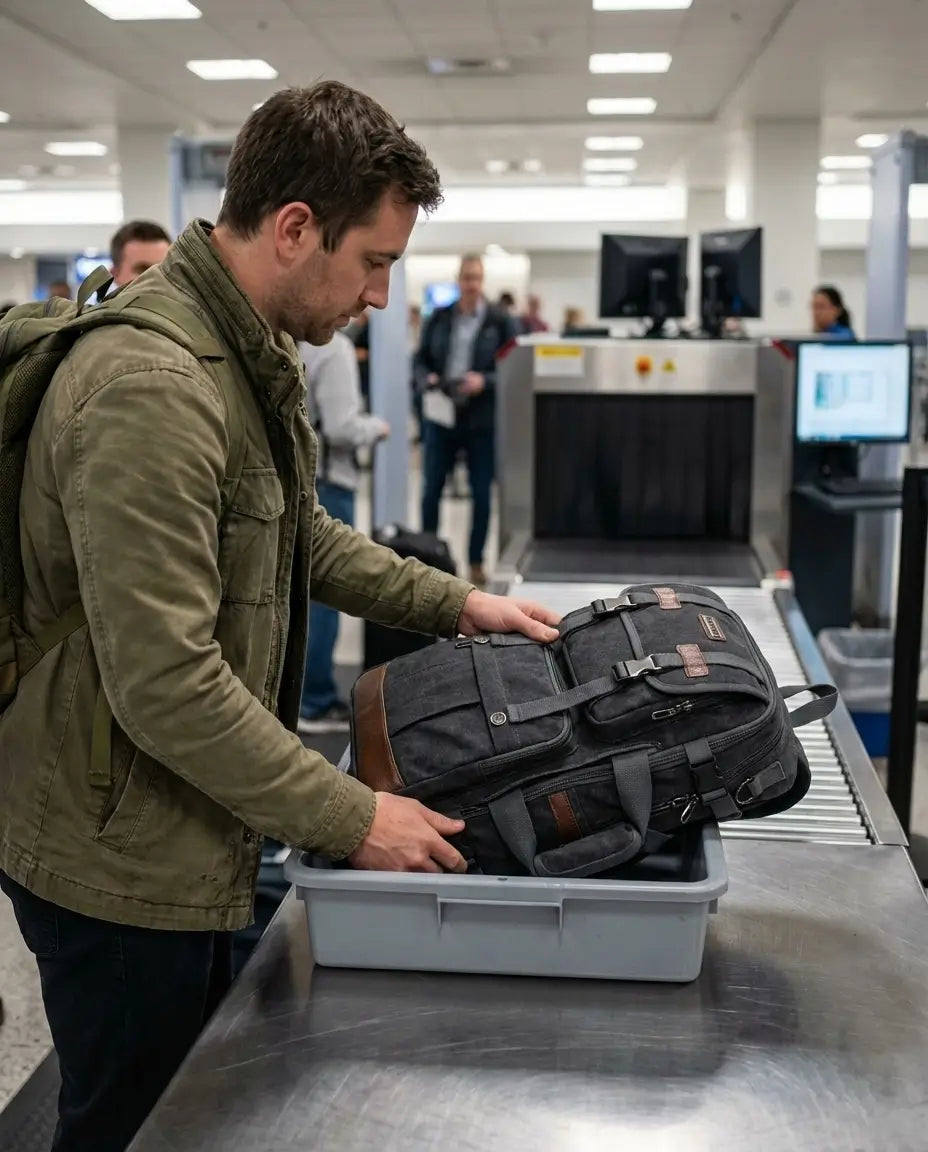
A travel backpack with compartments should guide your habits, not fight them. When every item has a logical place, you move faster through airports, security, and hotel rooms.
3. Comfort Shows Up on Day Three, Not Day One
Most backpacks feel fine in the store. Comfort problems usually appear after hours of walking—or days of repeated wear.
Experienced travelers pay attention to:
-
Shoulder strap shape (not just padding thickness)
-
Breathable back panels for warm climates
-
Load distribution that keeps weight close to the spine
This is especially important for long trips through Europe, Asia, or multi-city U.S. travel, where you’re carrying your bag more than you expect. A well-balanced travel backpack for men reduces fatigue in ways you only notice once you’ve used a bad one.

4. Materials: Durability Over Luxury Feel
Leather looks great, but it’s rarely ideal for extended travel. Most seasoned travelers gravitate toward:
-
High-density nylon or reinforced canvas
-
Water-resistant coatings instead of full waterproofing
-
Zippers and stitching that feel boring—but solid
In the field, durability beats aesthetics every time. Scratches, rain, overhead bins, and rough sidewalks are inevitable. The best backpacks age quietly instead of falling apart loudly.
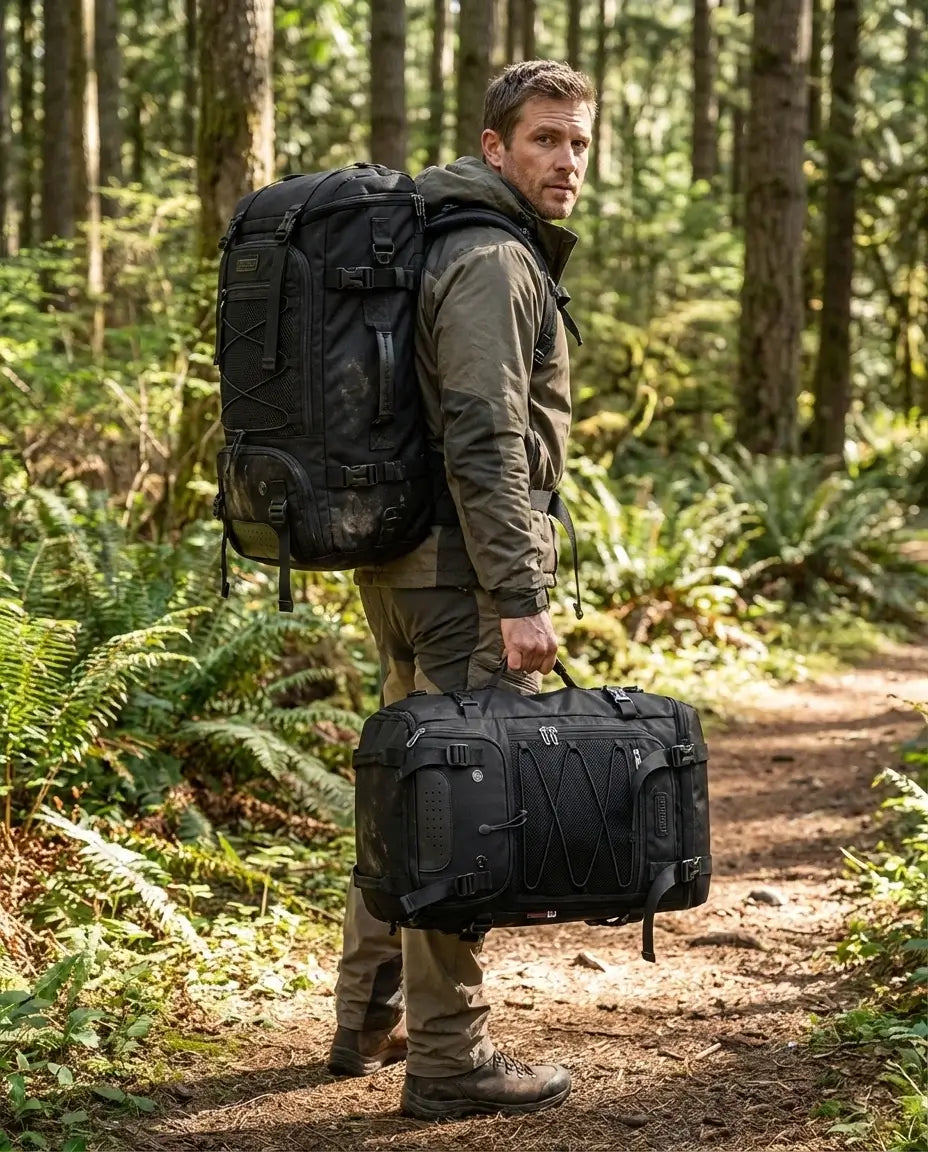
Brands like WITZMAN, for example, focus heavily on this balance—durable fabrics, reinforced seams, and practical layouts—because that’s what repeat travelers actually keep using year after year. A well-built carry on travel backpack should survive dozens of trips without demanding attention.

5. Security Features Should Be Subtle, Not Paranoid
Anti-theft design has its place, but overdoing it creates friction.
What works in real travel scenarios:
-
Hidden back pockets for passports or wallets
-
Lockable zipper loops (optional, not mandatory)
-
Minimal exterior access points in crowded areas
The goal isn’t to turn your bag into a vault—it’s to reduce easy mistakes when you’re tired, distracted, or navigating unfamiliar cities.
6. Versatility Is What Separates “Good” from “Great”
The backpacks men keep longest are rarely single-purpose.
A great travel backpack should work for:
-
Airport carry-on
-
Daily city exploration
-
Short business trips
-
Weekend getaways
That’s why convertible designs, clean silhouettes, and neutral colors matter more than people admit. A bag that looks appropriate in both a café and a boarding gate earns its place.
Final Thought: The Best Backpack Disappears When You Travel
Here’s something I’ve heard repeatedly from experienced travelers:
“The best backpack is the one I stop thinking about.”
If you’re constantly adjusting straps, digging for items, or worrying about space, the bag is working against you.
A thoughtfully designed men’s travel backpack—one that balances capacity, comfort, organization, and durability—doesn’t try to impress. It simply supports the way you move.
That’s the standard worth aiming for, whether you’re crossing continents or just traveling smarter on your next trip.
Share:
One Bag, Three Ways: Why Every Traveler Needs a 3-in-1 Convertible Backpack