


I met Jake in a coworking space in Lisbon. His setup was impressive—dual monitors, mechanical keyboard, noise-canceling headphones, the works. But here's the thing: he'd been in that same café for three weeks straight because he was terrified of moving his gear.
"I came here to see Europe," he told me over espresso. "But I'm basically living like I'm back in Seattle, except the coffee's better."
That's the paradox right there.
The Digital Nomad Reality Check
Let's talk numbers for a second. There are over 40 million digital nomads worldwide as of 2024, with 35% being Gen Z and 40% Millennials. Most of us are in our 30s, highly educated, and earning decent money. We've got the freedom to work from anywhere.
Anywhere. That's the promise, right?
But here's what the Instagram posts don't show: the constant low-level anxiety about your laptop. The mental math you do before every spontaneous beach trip. That moment when someone suggests hiking and you immediately think "but what about my MacBook?"
You wanted adventure. You got a really expensive paperweight that holds your entire livelihood.
The Tech-Heavy Burden
The average digital nomad today carries around $3,000-$5,000 worth of equipment. Laptop, tablet, phone, maybe a portable monitor, chargers, adapters, headphones, external hard drives. We're basically walking Best Buy outlets.
And unlike regular tourists who can throw caution to the wind, we can't. That laptop isn't just for Netflix—it's our office, our income source, our entire career in a 15-inch aluminum shell.
This creates a weird psychological weight. You know that feeling when you're responsible for someone else's expensive camera? That constant awareness, that background stress? Now imagine feeling that way 24/7 about your own equipment.
It gets exhausting.
The Spontaneity Tax
I've watched digital nomads turn down incredible experiences because of their gear. Can't do that boat trip—nowhere safe to store the laptop. Skip the music festival—too dusty for electronics. Pass on the mountain village—questionable WiFi and no coworking spaces.
The irony? We chose this lifestyle for freedom and ended up more constrained than people with traditional jobs.
My friend Sarah put it perfectly: "I left my 9-to-5 so I could be spontaneous. Now I'm planning everything around keeping my laptop dry."
There's a term for it now—"slomading," where nomads stay longer at fewer destinations. The data backs this up: in 2025, digital nomads visited an average of 6.2 locations compared to 7.2 in 2023. We're moving slower, staying safer.
But is that what we signed up for?
The Packing Philosophy Clash
Here's where things get interesting: the bag you need for tech protection is almost the exact opposite of what you want for spontaneous adventure.
Tech protection requires:
- Rigid structure for laptop safety
- Multiple padded compartments
- Water-resistant materials
- Secure, lockable zippers
- Heavy-duty construction

Spontaneous adventure wants:
- Lightweight flexibility
- Quick access to everything
- Packable, squishable design
- No fussy organization
- Grab-and-go simplicity
See the problem?
Most digital nomads end up choosing one philosophy or the other. Either you're the person with the fortress-like backpack that could survive a tornado (but weighs like one), or you're constantly stressed about your gear getting damaged.
Neither feels great.
Finding the Middle Ground
I'm not going to pretend I've solved this completely, but I've learned a few things from watching hundreds of nomads navigate this tension.
The convertible approach actually works. Those 3-in-1 bags everyone talks about? There's a reason they're popular. Being able to switch between a structured backpack for travel days and a more casual duffel for exploring changes everything. Your bag adapts to your needs instead of you adapting to your bag.
Separate compartments aren't just about organization. When your laptop has its own padded space—properly padded, not just a sleeve—you stop treating your entire bag like a fragile egg. You can actually throw in a water bottle without panic. Small thing, huge mental shift.
USB charging ports matter more than you'd think. Not for the obvious reason. Yes, charging on the go is convenient. But the real value? You stop carrying your laptop out just to charge your phone at cafés. Less exposure, less risk, more actual coffee-drinking instead of equipment-guarding.
Water resistance is non-negotiable. But not the heavy-duty "I'm going sailing" kind. Modern nylon bags can handle a sudden rain shower without adding noticeable weight. That peace of mind—knowing a surprise storm won't destroy your career—is worth every penny.
The shoe compartment is secretly brilliant. Hear me out. Having a separate, waterproof space for dirty or wet items means you can actually do things without contaminating your tech space. Beach volleyball before that client call? No problem. Muddy hike in the morning, coworking in the afternoon? Done.
The Gear That Gets It
I've seen too many digital nomads carrying stuff that's either overbuilt for tech (military-grade tactical backpacks that scream "I'm paranoid") or underprepared for travel (fashion backpacks that look great but protect nothing).
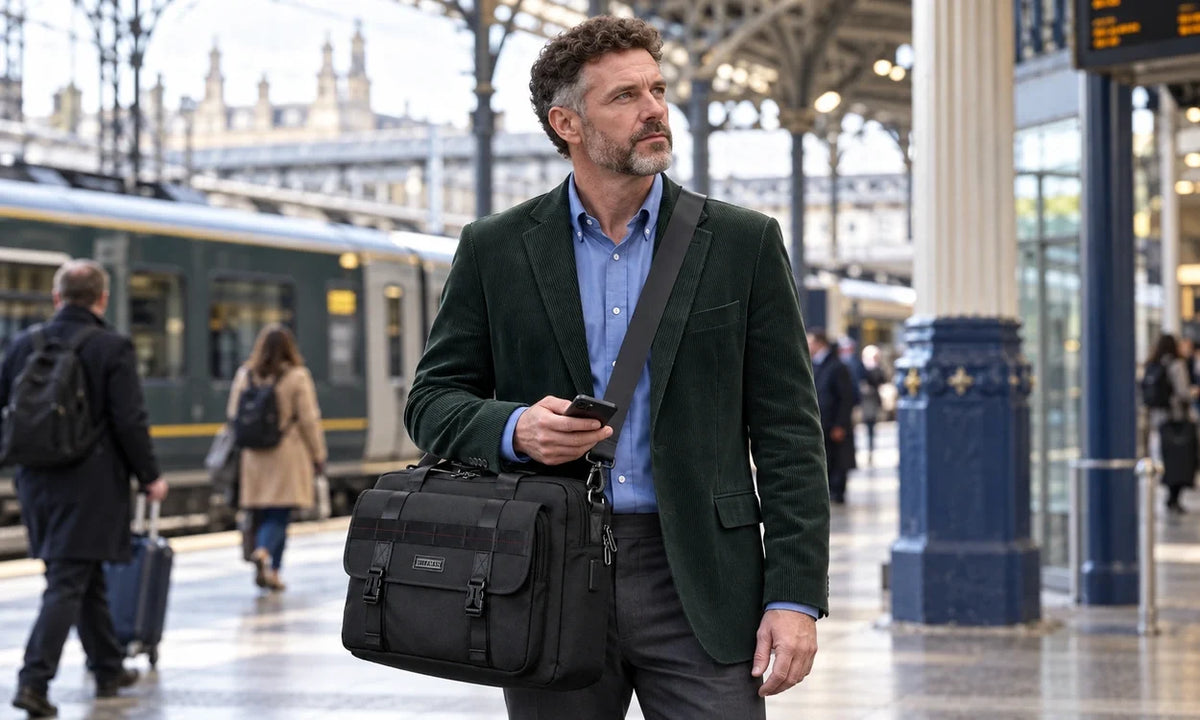
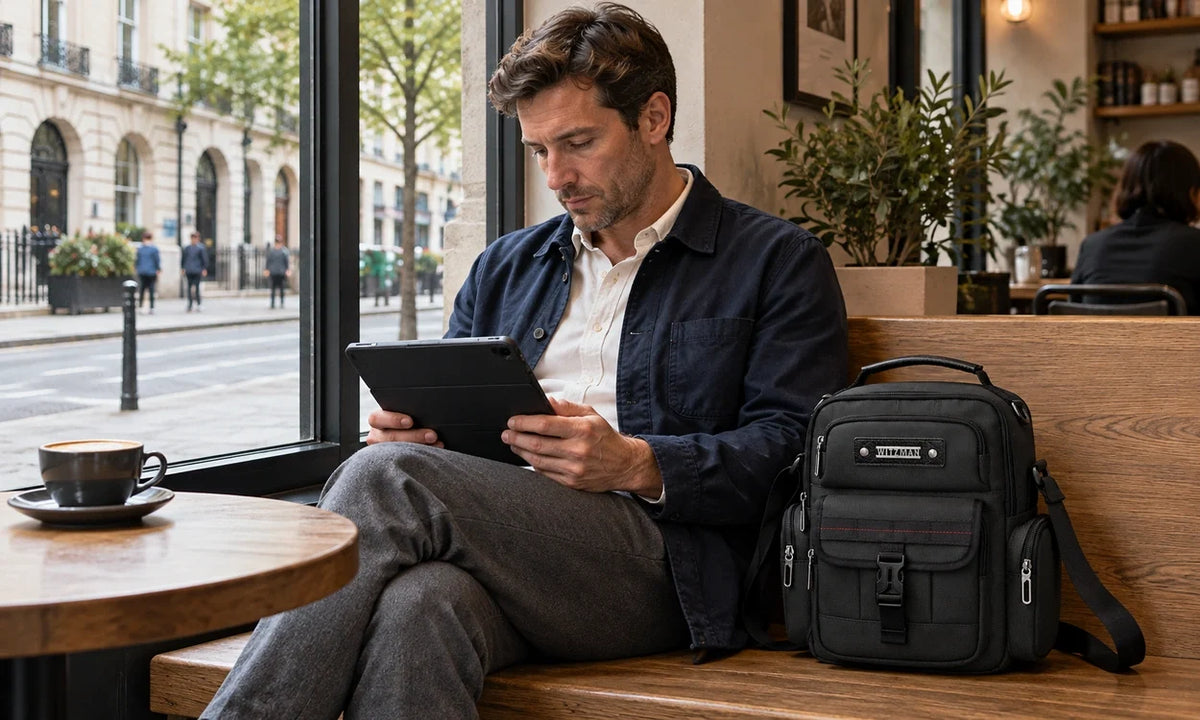
What actually works? Bags designed specifically for this dual life. Things like the WITZMAN convertible series that understand you need your 17-inch laptop protected and you need to be able to grab everything and sprint for a train in 30 seconds.
Multiple compartments (we're talking 14-18 separate spaces) sound excessive until you realize they let you segment your life. Tech in one area, travel stuff in another, gym clothes in the shoe compartment. Everything separated means nothing gets sacrificed when you're trying to have it all.
The luggage strap attachment thing? Game changer for airport days. Suddenly your daily bag isn't competing with your larger luggage—it's working with it.
The Real Question
Here's what I've realized after three years of nomading: the paradox isn't really about gear at all.
It's about mindset.
We want to be free-spirited adventurers and reliable professionals. We want to make impulsive decisions and maintain stable income. We want to feel like backpackers and earn six figures.
That's a lot to ask from a bag.
But maybe the point isn't choosing between tech protection and spontaneous adventure. Maybe it's about building a system—not just a bag, but a whole approach—that lets you do both, just not always at the exact same time.
Some days you need to be the person with the organized backpack who shows up to coworking spaces prepared. Other days you need to be the person who can say yes to that last-minute boat trip.
The key is having gear that can shift between those modes as easily as you do.
The 2025 Reality
The digital nomad lifestyle isn't going anywhere. If anything, numbers are projected to exceed 60 million by 2030. More people are figuring out that you can work and travel simultaneously.
But we're also getting smarter about it. The wild sprint from city to city every few weeks? That's fading. Now digital nomads are averaging 6.4 weeks per location, up from 5.4 weeks just two years ago.
We're learning that you don't have to choose between being a digital nomad and having a life. You just need the right setup.
And yeah, that starts with a bag that actually gets both sides of who you are.
Because at the end of the day, your laptop is how you fund the adventure. But the adventure is why you're carrying the laptop in the first place.
Both matter. Both deserve protection. Both can happen.
You just need to stop treating them like enemies.
Currently nomading from Chiang Mai. Laptop is fine, thanks for asking.

Share:
Why Nylon Backpacks Dominate Both City Commutes and Outdoor Adventures: The Science Behind the Material
Instagram vs Reality: Travel Bags That Actually Work Beyond the Perfect Shot