

The duffel may be easy to close before leaving home. The harder moment can come on the way back, when the clothes are no smaller but a gift, borrowed book or extra sweater has joined them. A useful Thanksgiving weekend packing list accounts for both journeys: a small set of clothes for dinner, relaxing and a walk, separate wash and laundry storage, and a specific place for whatever comes home with you.
For a two-night visit, think in activities rather than complete outfits. One pair of trousers may cover the drive and family dinner. One knit may work over a clean shirt at the table and a different base layer outdoors. A weekender bag should support those changes without becoming a container for every possible holiday plan.
Leaving at Dusk: Make the First Things Easy to Reach
Begin with the arrival you actually expect. If you will pull up after dark, keep your outer layer, keys and phone accessible without opening the main clothing load. A jacket underneath two days of clothes is inconvenient precisely when you want to get out of the car, lift the duffel and greet everyone.
Keep what you need during the drive with you, not buried in the trunk. Secure the duffel for the journey, and give a host gift its own planned place so it can be handed over without unpacking at the door. If it is large or fragile, it may need to travel separately rather than become the object that determines the whole bag's shape.
Pack the main compartment in the order you will use it. Clothes for the first evening can sit near the opening; the dinner shirt should have a broad, relatively flat place rather than being wedged around shoes. Small things needed at bedtime belong together, not distributed among whichever pockets still look empty.
Before you leave, ask two useful questions: how dressed-up is dinner, and what kind of walk is planned? A relaxed meal at home and a neighborhood loop do not require the same clothing as a formal dinner and a muddy trail. Check the forecast for the place you are visiting, not just the weather outside your own front door.
Dinner, Downtime, a Walk: Three Uses, Not Three Wardrobes
If you are deciding what to pack for Thanksgiving weekend, start with the clothes that can move between those three settings. Then add the few pieces that genuinely cannot. This is where a short list becomes more useful than a long list of holiday essentials.
At the Table: Keep One Clean Combination Ready
Choose one shirt, polo or other top that suits the family's plans, and pair it with the trousers and knit you have already selected. A button-down under a crewneck is one option; a simple shirt without the knit may be enough in a warm house. The point is to settle on a combination, not to pack several competing possibilities.
If the journey is likely to leave your travel trousers uncomfortable or unsuitable for dinner, pack a fresh pair. Otherwise, leave the duplicate out. Give the clean top a place away from worn clothing and footwear, and do not expect tightly compressing a crisp shirt to replace hanging or smoothing it after arrival.
Between Meals: One Comfortable Set Can Do Several Jobs
Light lounge trousers and a soft top can cover reading, a film and slow mornings. Sleepwear can overlap with that set if it suits your routine, but it does not have to. Pack a separate sleep top when that is more comfortable; avoid automatically adding a second full casual outfit on top of it.
Ask about the room before packing for an imagined cold guest bedroom. You may still want warm socks or a light sleep layer, but an entire extra fleece is a different commitment. Keep personal necessities on your own list rather than assuming a host will have them.
Outside: Change the Base Layer Before Adding Another Sweater
For a short walk, use a fresh base top under the chosen knit and the outer layer appropriate to the actual conditions. A rain shell, warmer coat, hat or gloves may be necessary; decide from the forecast and route, not a generic picture of November.
Keep the dinner combination clean until it is needed. If you take the walk first, use a different base top and change afterwards. Clothing that becomes damp or dirty is no longer interchangeable with a clean dinner layer simply because it was intended to do both jobs.
A useful holiday weekend packing list for men is therefore not three outfits sealed into three cubes. It is a repeatable base, a clean dinner option and a small number of changes for comfort, weather and hygiene.
The Bulky Choice: A Second Knit or Another Pair of Shoes?
Lay those two additions beside the bag before committing to either. A thick sweater takes up a soft, compressible shape. Spare shoes make a more rigid shape and need separation from clean clothes. Their effects on the load are different even when both seem like reasonable extras.
Prefer one substantial knit when you can use it over different tops and your outer layer already handles the trip. Wear it during travel if comfortable, or keep it easily accessible. A second bulky knit earns its space only when it does a different job, such as providing a necessary clean change after an outdoor activity.
Prefer spare footwear when there is a real change of surface or dress requirement. Boots for a muddy trail and shoes for a dressier dinner may both be justified. Two similar casual pairs for a dry neighborhood walk are harder to justify. If your travel shoes can reasonably cover the meal and walk, that is often the simpler starting point.
Do not make the one-duffel goal more important than the visit. If a second pair and another warm layer are both necessary, pack them and choose luggage accordingly. Remove optional duplicates before cutting something the plans or conditions genuinely require.
Separate the Wash Kit, Shoes and Worn Clothes
These are three different packing problems. A wash kit needs to come out at the bathroom. Spare footwear needs its own location. Used clothing needs a home for the journey back. One loosely defined dirty-items pocket should not be expected to solve all three.
Bring a compact, closed wash kit with the toiletries you actually use over two nights: toothbrush, toothpaste, deodorant and the grooming items your routine requires. Confirm towels and basic bathroom supplies with the host if that will change your list. Our toiletry bag size and layout guide can help when the container itself has become the bulkiest part of the kit.
Close each bottle securely and keep liquids separately contained. A bag's wet/dry pocket can offer useful separation, but its lining is not a reason to pack a leaking bottle. Nor does the existence of a side pocket establish that everything placed inside it leaves the main compartment unaffected.
Pack an empty laundry pouch from the start. Keep shoes and damp or worn clothing apart from the dinner top and any clean items that will return unused. Before packing damp clothing for the drive, use suitable separate containment rather than pressing it against gifts or dry garments. For the detailed physical layout, see packing shoes, clothes and toiletries in one duffel.
A pocket is useful when it gives an item a predictable place. Filling every pocket merely because it is available makes a short visit harder to repack.
A Duffel That Matches This Kind of Visit

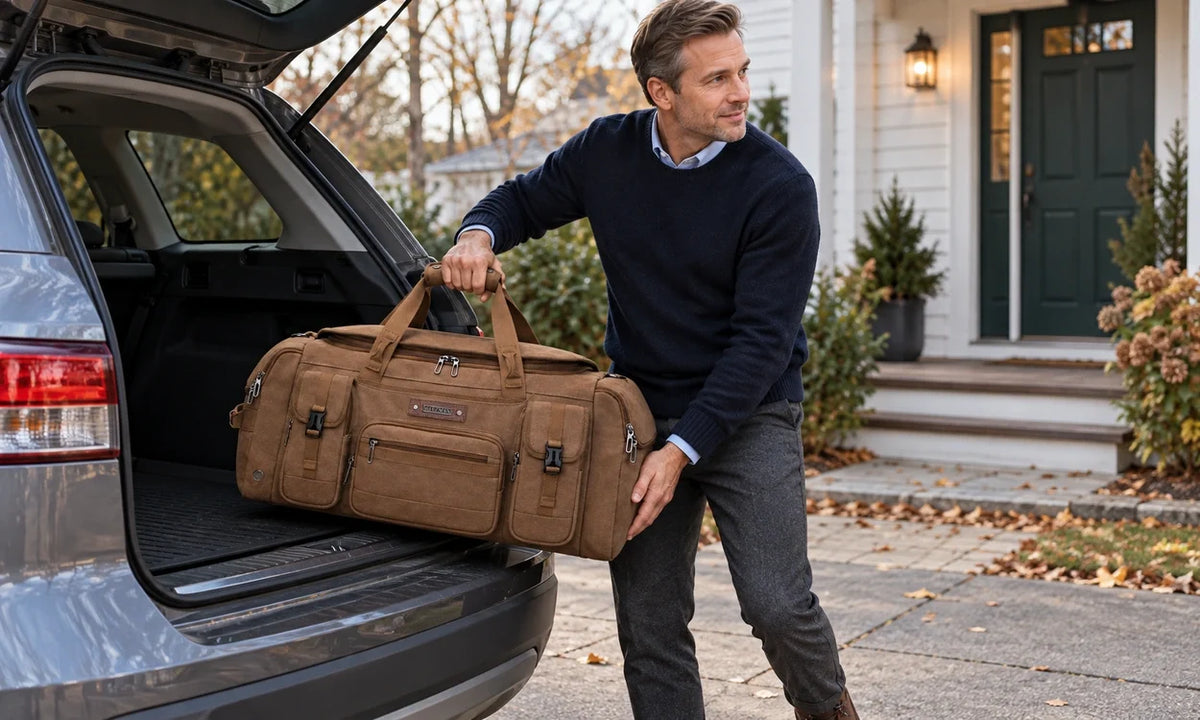
The WITZMAN A8035 canvas duffel is the main option for this road-trip plan. Its listed design combines a main clothing compartment, a separate side shoe compartment and a wet/dry pocket. The official listing gives a nominal 55L capacity, a 24.5-inch length and a 1.9 kg empty weight.
That makes it an option to consider for bulky clothing and separate footwear, not a minimum size for two nights or a promise that this exact load fits. Its length and empty weight are real tradeoffs when the trip involves more carrying than walking from a car to a house. For a flight, check the packed exterior against the booked allowance; a weekender label does not establish airline acceptance.
If nylon and a lower listed empty weight matter more, the B757 duffel is a conditional alternative: nominally 50L and 1.55 kg, with shoe and wet/dry storage. Its shoe pouch is listed as folding back when unused. Compare the actual load and route rather than treating either capacity label as a two-night fit result.
The product match here is based on published specifications and official photographs, not a hands-on Thanksgiving packing trial.
Before the Return Drive: Give New Items an Actual Place
Reserve space before leaving, using something with a useful shape. Put an empty soft pouch or an object roughly the size of an expected gift alongside the planned load. Close the bag without forcing it. Then remove the placeholder and keep that space unassigned. This is a rehearsal you can do at home, not a recommendation to reserve an arbitrary percentage.
If you already know you are bringing a book back, try a book-sized object rather than a soft rolled T-shirt. If you expect a larger box, test that kind of footprint and whether it can pass through the opening. Empty space is useful only when its shape matches what needs to go there.

Illustrative return-packing scene. Check the gift's shape alongside the clothing and laundry; this AI-generated image is not evidence of a measured packing result.
On departure morning, take the clothes out far enough to see what changed. Put worn items together, fold the clean pieces that remain and rebuild the load around the incoming object. Clothes do not stop occupying space after they have been worn, and a loose laundry bundle may pack differently from the folded clothes that arrived.
Handing over an outgoing gift may free some room, but do not assume it creates the right space for a different gift coming back. A flat book, rigid box and soft knit are not interchangeable shapes. Keep delicate objects away from shoes and pressure points, and do not count the duffel's fabric as protective packaging.
Food coming home is a separate transport decision, not another item for the clothing pocket. Use appropriate dedicated storage rather than treating the wet/dry compartment as a food carrier or cooler. Oversized or fragile gifts may also need to travel separately. One duffel for your clothing does not have to mean forcing every object from the visit into it.
Finish with the small items that tend to remain around a family house: charger at the socket, wash kit in the bathroom, extra layer on a chair, shoes by the door and keys in a coat pocket. Put the items needed during the return drive within reach again before loading the trunk.
The Two-Night List to Check Before You Zip
This is a proposed starting load for an arrival evening, a full middle day and a departure morning. Adjust quantities for your routine, clothing sizes, dinner plans and conditions. It is not a measured capacity claim for either product.
Wear or Keep Accessible During the Journey
- One pair of trousers and one pair of shoes that can cover the actual travel plans.
- A comfortable base top, the chosen knit if useful, and the appropriate outer layer.
- Phone, ID, wallet, keys and personal essentials needed during the journey.
- A host gift, if bringing one, in a location where you can retrieve it on arrival.
Inside the Duffel
- One clean dinner shirt or top, plus one casual base top for the walk or a fresh change.
- Two changes of underwear and two pairs of socks; add what your own routine requires.
- One light lounge/sleep set, with separate sleepwear only if needed.
- A second pair of trousers or spare footwear only when the plans justify them.
- A closed, compact wash kit and any essential personal care items.
- Phone charger and cable, glasses if used, and the small items you actually need.
- An empty laundry pouch and appropriate separate storage for anything damp.
- The return-gift space checked with a placeholder, then left unassigned.
Confirm With the Host or Your Plans
- Dinner dress expectations, towels and sleeping arrangements.
- The walk's surface and expected conditions; any required additional layer or footwear.
- Whether an outgoing gift, borrowed object or incoming present changes the luggage plan.
The best final edit is usually an unnecessary duplicate, not something essential to comfort or the occasion. A good two-night load lets you arrive, change for dinner, head out for a walk and leave again without rebuilding the entire bag each time.
For a closer look at exterior size rather than nominal volume, use the duffel dimensions and size chart. Browse the WITZMAN weekender and duffel collection when the right choice is a different size, not another round of squeezing.

Share:
One Night Away for Work: What to Pack in an Expandable Briefcase