

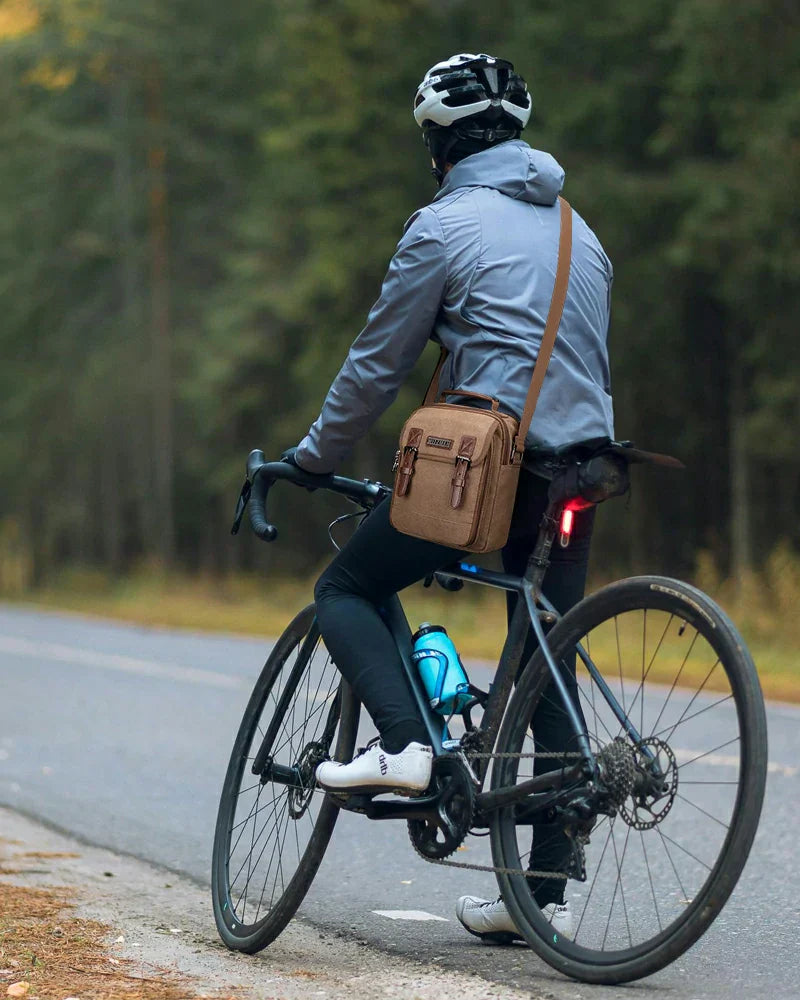
There’s a point on almost every city trip where a full backpack starts to feel like too much.
You step out of your hotel for a quick walk—maybe just to grab coffee or explore a few blocks—and suddenly carrying a large bag doesn’t make sense. It’s not about weight as much as it is about freedom. You want something lighter, closer to your body, and easy to move with.
That’s exactly where crossbody bags for men come in.
Over the past few years, they’ve shifted from niche accessories to practical, everyday travel gear. And in cities especially, where movement, awareness, and convenience matter, a well-designed men’s crossbody bag can make a noticeable difference.
This isn’t about fashion trends. It’s about function—how a streamlined crossbody bag supports real movement through a city without getting in your way.
Why Crossbody Bags Make Sense for City Travel
If you’ve spent time navigating busy urban environments—subways, crowded streets, airports—you’ve probably noticed how often you reach for your essentials.
Phone. Wallet. Passport. Earbuds.

With a backpack, every one of those actions requires a pause. With a crossbody bag for travel, everything sits within reach.
From a practical standpoint, crossbody bags solve three common problems:
- Accessibility – You don’t need to remove the bag to access items
- Mobility – The bag stays close to your body and moves with you
- Security – It’s easier to keep your belongings in sight in crowded areas
For short outings, city walks, or even commuting, they often feel more natural than a full-sized travel backpack for men.
What “Streamlined Design” Actually Means
You’ll see the term “streamlined” used often, but in real-world use, it has a very specific meaning.
A streamlined crossbody bag isn’t just small—it’s intentionally designed to carry only what you need, without wasted space or awkward bulk.
In practice, that usually includes:
- A compact main compartment
- One or two quick-access pockets
- Minimal internal dividers
- A clean, structured shape
The goal isn’t to maximize capacity. It’s to optimize usability.
A good crossbody bag should feel almost invisible when you’re walking—secure, balanced, and unobtrusive.
Key Features to Look for in a Crossbody Bag
Not all crossbody bags are built the same. Some lean heavily toward style, while others focus purely on utility.
For city exploration, a balance of both tends to work best.

1. Comfortable Strap Design
The strap is more important than most people expect.
A well-designed strap should:
- Distribute weight evenly
- Stay in place while walking
- Be adjustable for different body types
Some travelers prefer a wider strap for comfort, especially if carrying heavier items like a camera or power bank.
2. Smart Organization (Without Overcomplication)
Too many compartments can actually slow you down.
A practical crossbody travel bag usually includes:
- One main compartment
- A small internal pocket for valuables
- An external pocket for quick access
The key is knowing where everything is without thinking.
3. Durable, Lightweight Materials
City travel can be unpredictable—weather changes, crowded environments, constant movement.
Materials like:
- Water-resistant nylon
- Reinforced canvas
- Lightweight polyester blends
tend to offer a good balance between durability and weight.
A lightweight crossbody bag for men should hold its shape without feeling stiff or bulky.
4. Secure Closures
Security matters more in urban settings.
Look for:
- Quality zippers
- Hidden pockets
- Anti-theft design elements
While no bag is completely theft-proof, a thoughtful design can reduce risk significantly.
Crossbody Bags vs Backpacks: When to Use Each
From experience, crossbody bags don’t replace backpacks—they complement them.
A common travel setup looks like this:
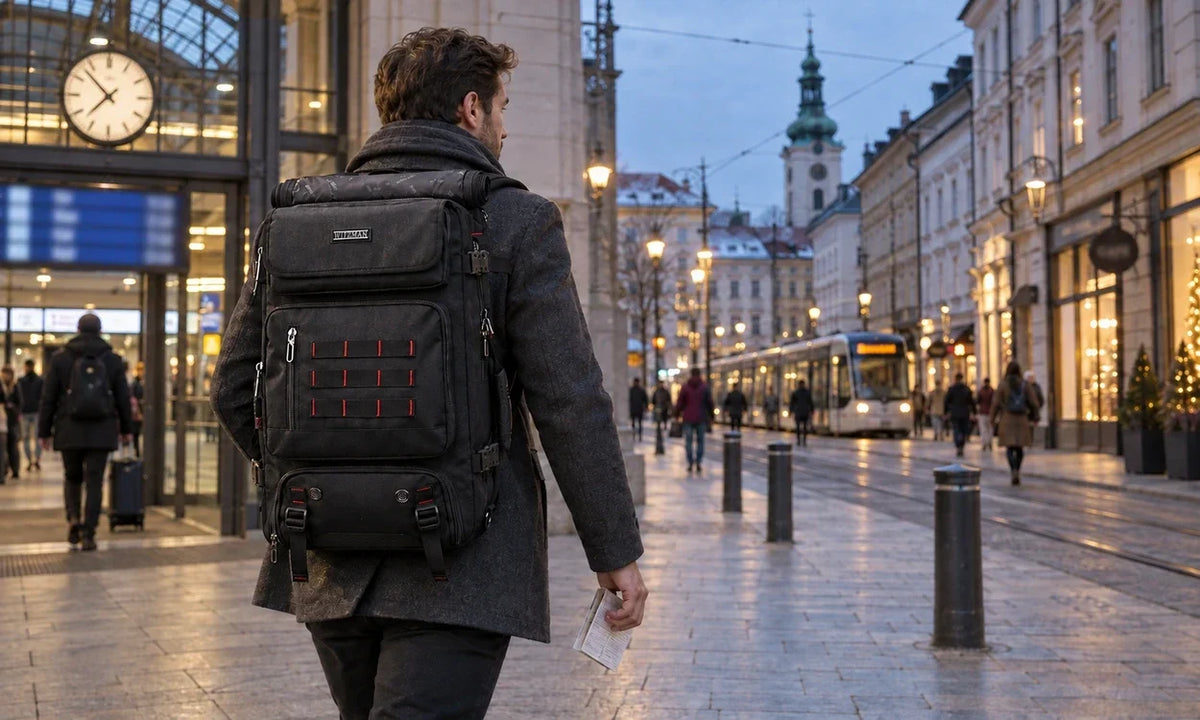
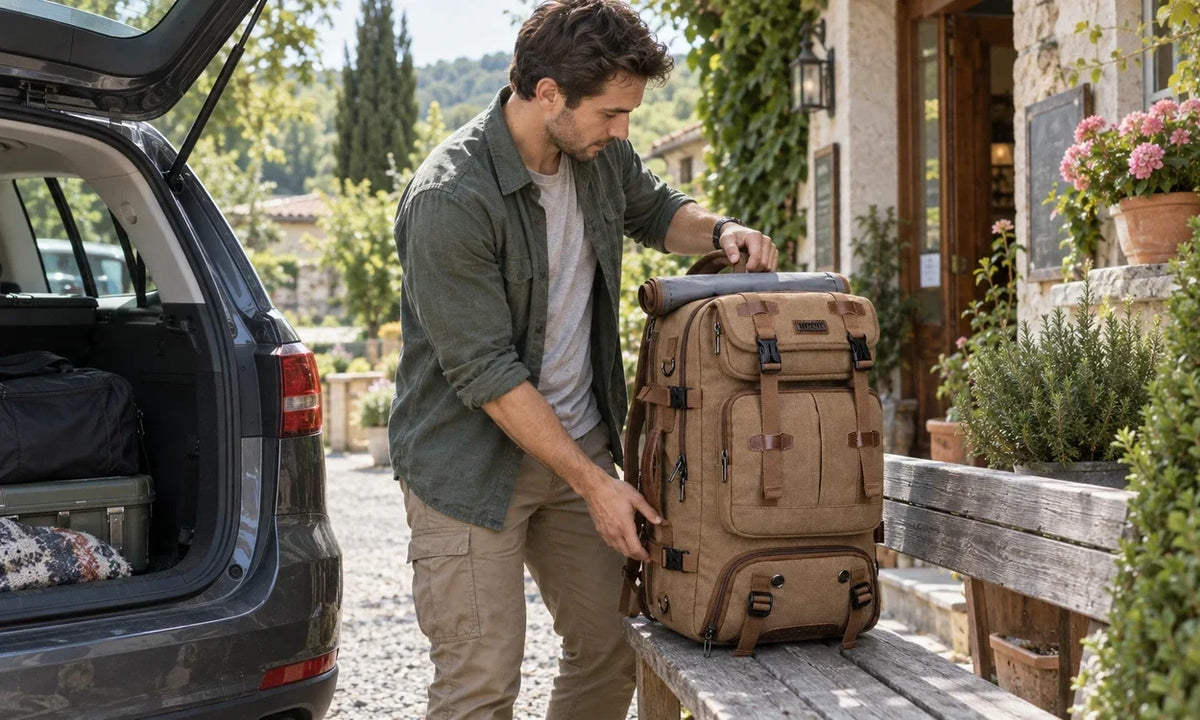
- Backpack (carry on travel backpack) for flights, longer days, or full packing needs
- Crossbody bag for daily exploration, short outings, or quick errands
This combination works well because it separates “storage” from “access.”
You keep bulk items in your travel backpack with compartments, while your crossbody bag holds essentials you need throughout the day.
How Crossbody Bags Fit Into Modern Travel

Travel habits have changed.
People move more frequently, pack lighter, and expect flexibility from their gear. A single bag often isn’t enough anymore—not because of capacity, but because of different use scenarios.
Brands like Witzman have started integrating crossbody bags into broader travel systems—designing them to work alongside men’s travel backpacks, rather than replacing them.
This approach makes sense:
- Use a backpack for transit
- Switch to a crossbody bag for movement
- Keep essentials accessible at all times
It’s less about having more bags and more about using the right tool for the moment.
Real-World Scenarios Where Crossbody Bags Work Best
From practical use, crossbody bags tend to shine in a few specific situations.
Walking Through a City
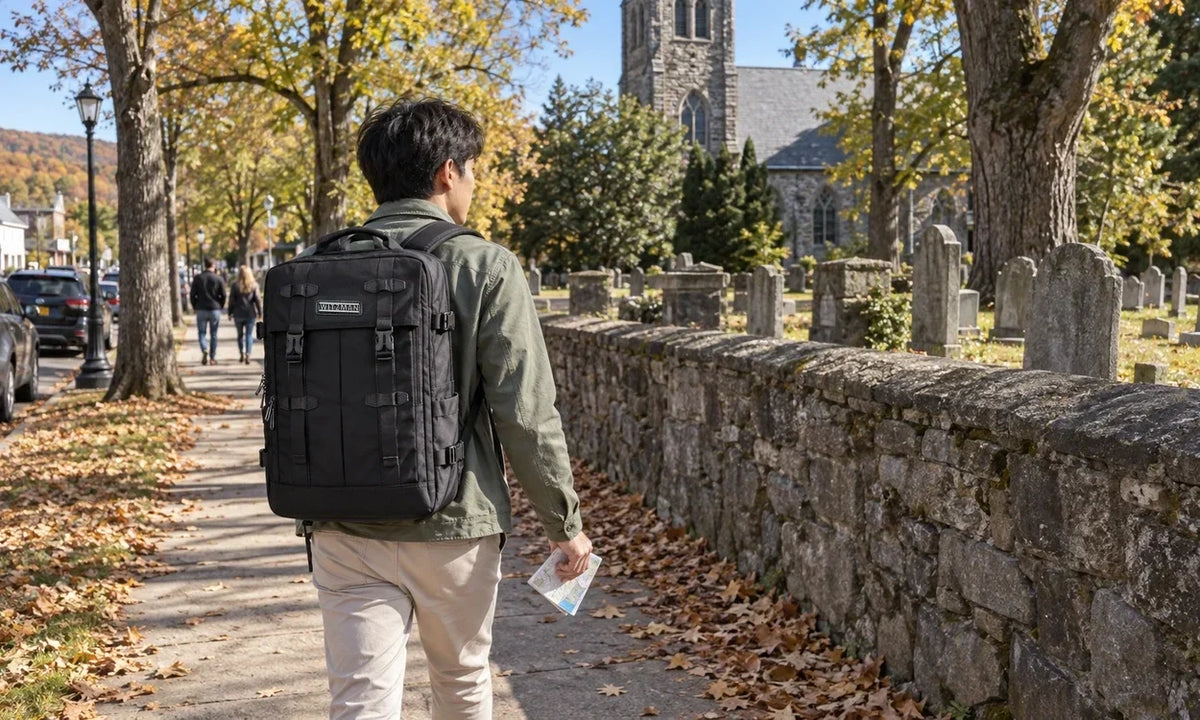
Whether it’s New York, London, or Tokyo, city walking involves constant stops, turns, and interactions.
A men’s crossbody bag for city travel keeps your essentials close without interrupting your movement.
Airports and Transit
Airports are a mix of waiting, walking, and quick access moments.
Keeping your passport, boarding pass, and phone in a crossbody bag for travel makes transitions smoother.
Short Day Trips
For short outings, carrying a full backpack often feels unnecessary.
A crossbody bag provides just enough space for:
- Wallet
- Phone
- Charger
- Small personal items
Nothing more, nothing less.
Choosing the Right Size
One common mistake is choosing a bag that’s either too small or too large.
As a general guideline:
- Small (1–2L): Essentials only (phone, wallet, keys)
- Medium (3–5L): Adds room for chargers, sunglasses, small accessories
- Larger (6L+): Can handle light travel gear but may lose the “streamlined” feel
For most city use, a medium-size crossbody bag tends to offer the best balance.
Style vs Function: Finding the Right Balance
Crossbody bags sit at an interesting intersection between style and utility.
A bag that looks good but lacks structure becomes frustrating to use.
A bag that’s overly technical may feel out of place in urban environments.
The best designs tend to:
- Use neutral colors
- Avoid excessive branding
- Maintain a clean silhouette
This allows the bag to fit naturally into different settings—cafes, public transport, or casual business environments.
Final Thoughts
Crossbody bags aren’t meant to carry everything. That’s not their role.
What they do offer is something more subtle: freedom of movement.
When you’re walking through a city, navigating unfamiliar streets, or simply stepping out for a few hours, having only what you need—nothing more—changes how you move and how you experience the environment.
A well-designed crossbody bag for men should feel like an extension of your routine. You don’t think about it. You just use it.
And in many ways, that’s what good travel gear is supposed to do.
FAQ: Crossbody Bags for Men
1. Are crossbody bags practical for everyday use?
Yes. A crossbody bag for men is especially practical for daily essentials like a phone, wallet, and keys. It offers quick access and keeps items secure.
2. Can a crossbody bag replace a backpack?
Not entirely. A crossbody bag works best for light carry, while a travel backpack is better for larger items or longer trips. Many travelers use both.
3. What size crossbody bag is best for city travel?
A medium size (around 3–5L) usually provides enough space without becoming bulky.
4. Are crossbody bags safe in crowded cities?
They can be safer than backpacks since they stay in front of your body. Choosing a design with secure zippers and hidden pockets helps.
5. What materials are best for crossbody bags?
Water-resistant nylon and durable canvas are commonly used because they balance weight and durability.
6. How should a crossbody bag fit?
It should sit comfortably across your chest or back, close to your body, without swinging excessively when you walk.
Share:
Adventure vs. Business: Travel Backpacks That Transition Seamlessly
Why I Stopped Using Suitcases and Switched to a Travel Backpack